IRD GLASS
Products / Custom Laser Optics

Custom Laser Optics

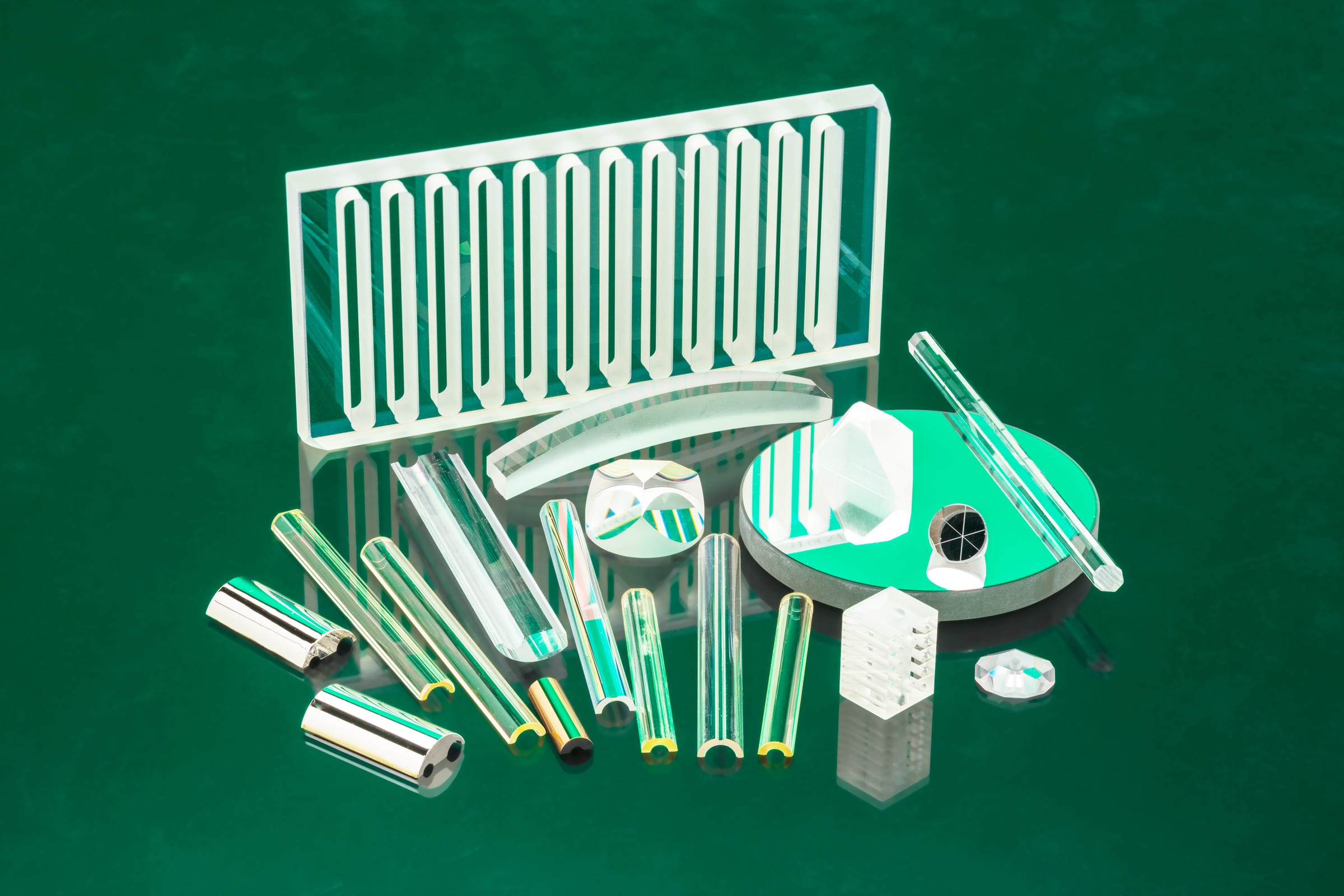
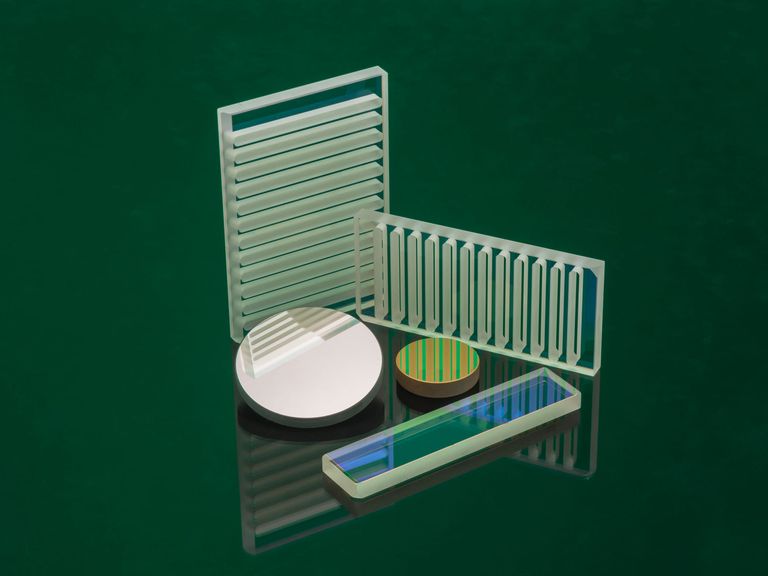
Cavity reflectors, high-reflectivity mirrors, beamsplitters, filters, corner cubes, and tooling built for laser OEM systems where energy density and alignment leave little room for process drift.

IRD manufactures to your print — it does not design your optic. Send the drawing with the source type, wavelength, pulse conditions, coating target, and inspection requirement, and the technical team reviews it for manufacturability before quoting. For a new design that review is free of charge.

HR mirror reflectivity
>99.9%
IRD-reported capability for high-reflectivity mirrors. Wavelength, polarization, and angle of incidence set what is achievable on your part.
Laser damage threshold
>80 J/cm²
At 1064 nm, 1 ms. A pulsed fluence figure — not comparable to a nanosecond or CW rating, and not a blanket value for every mirror.
Superpolished finish
<2 Å Ra
An advanced HR-mirror capability, not a default grade. The general shop polishing capability is Ra < 5 Å.

What we manufacture

Laser components built as a system

The substrate, figure, finish, edge geometry, and coating all contribute to what the optic does at operating power.

Component families

What IRD builds for laser OEMs, from the cavity out to the hardware that holds the beam path.

Precision laser reflectors manufactured by IRD Glass

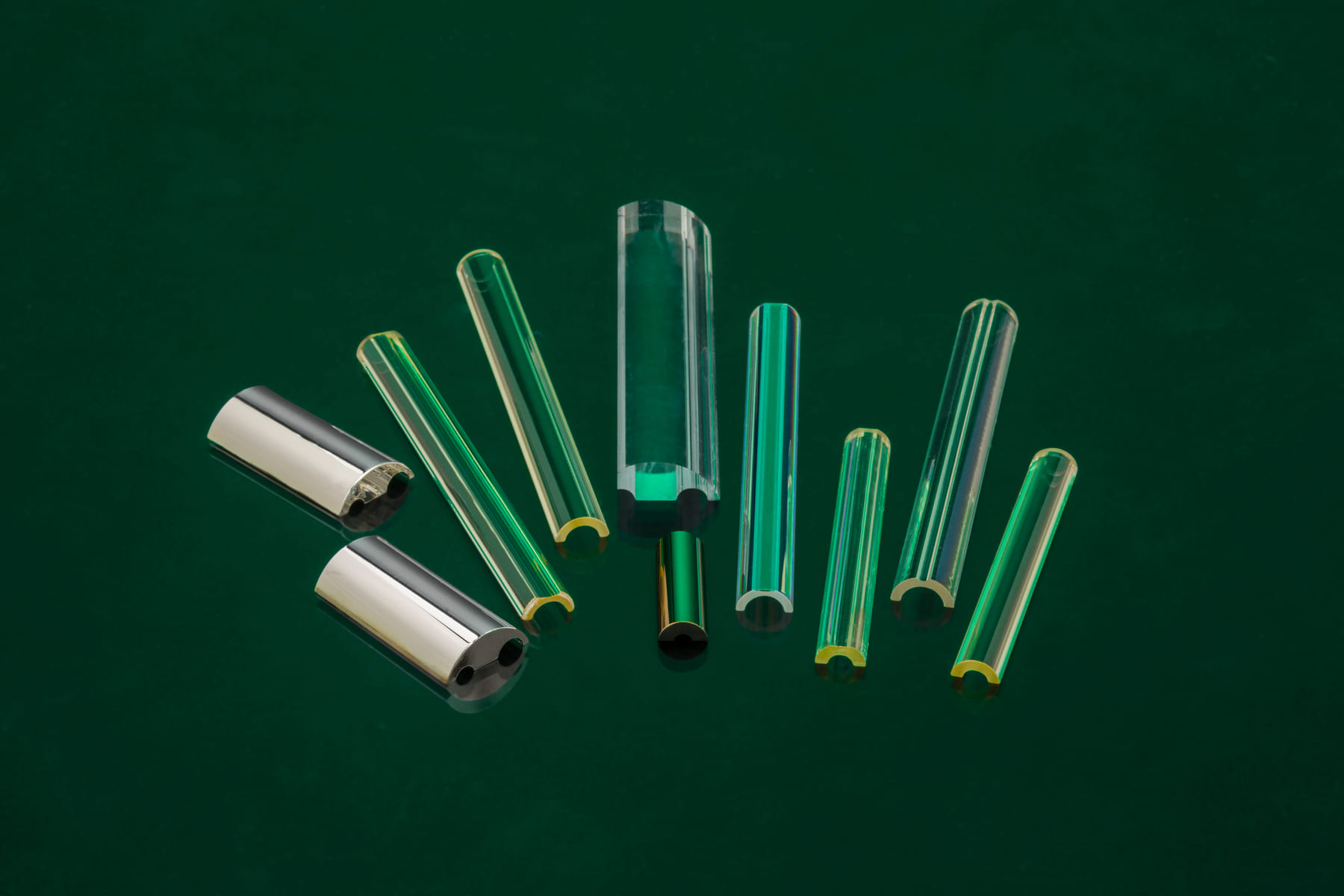
Cavity reflectors

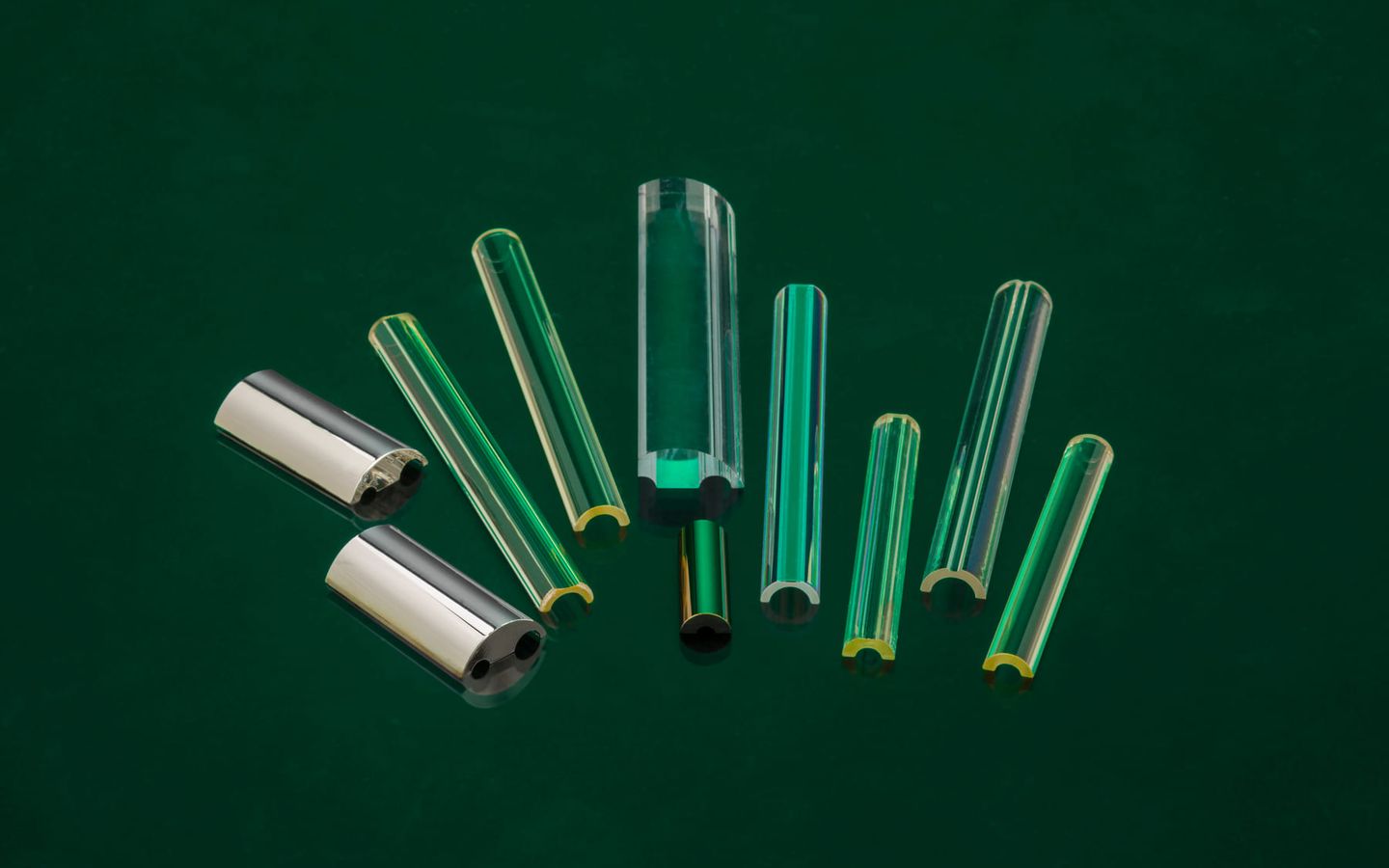
Custom reflector cavities for solid-state laser assemblies, manufactured in sapphire, doped glass, and other optical materials.

Prototype through repeat production
Precision laser mirrors manufactured by IRD Glass

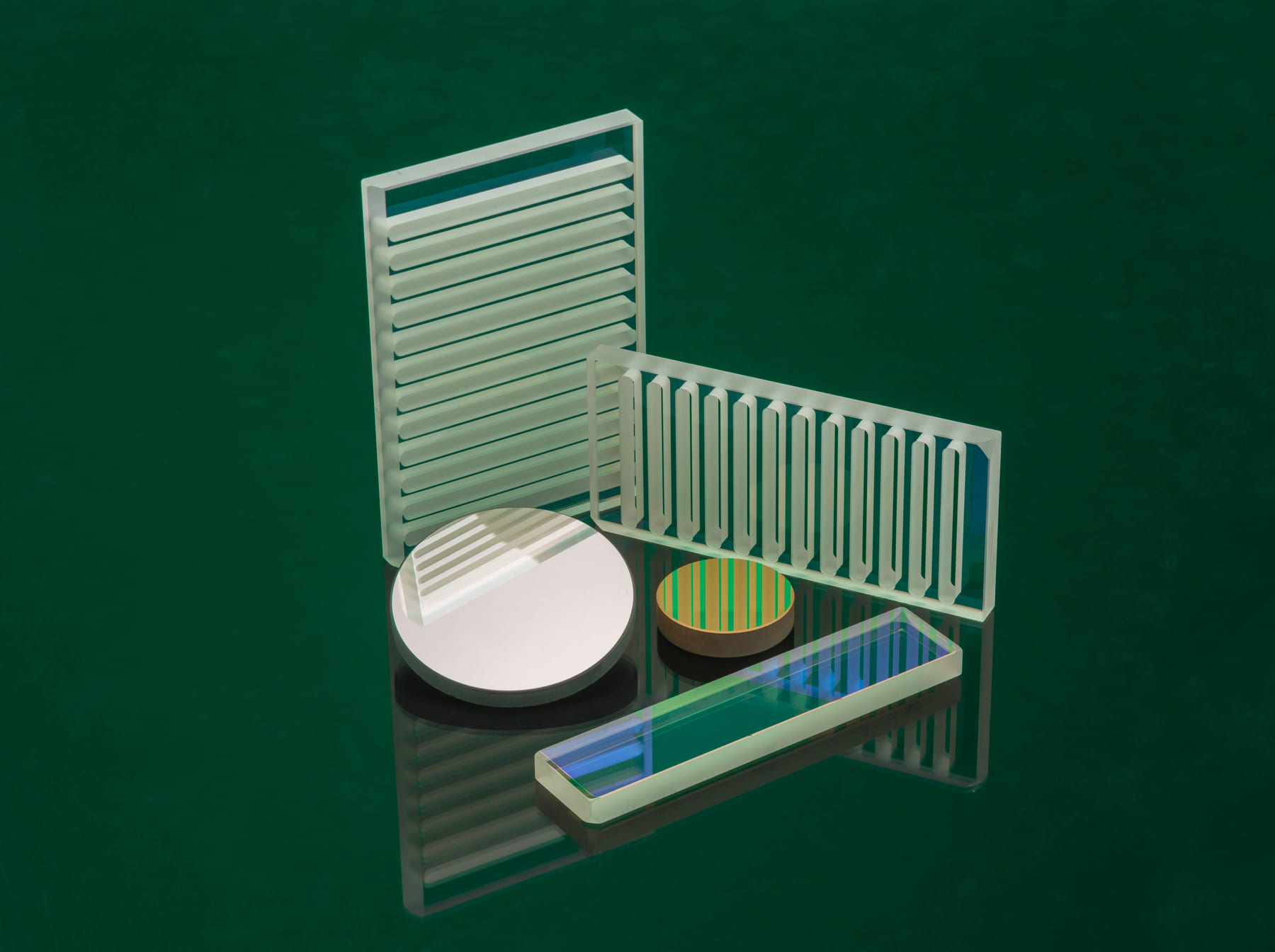
HLDT and HR mirrors

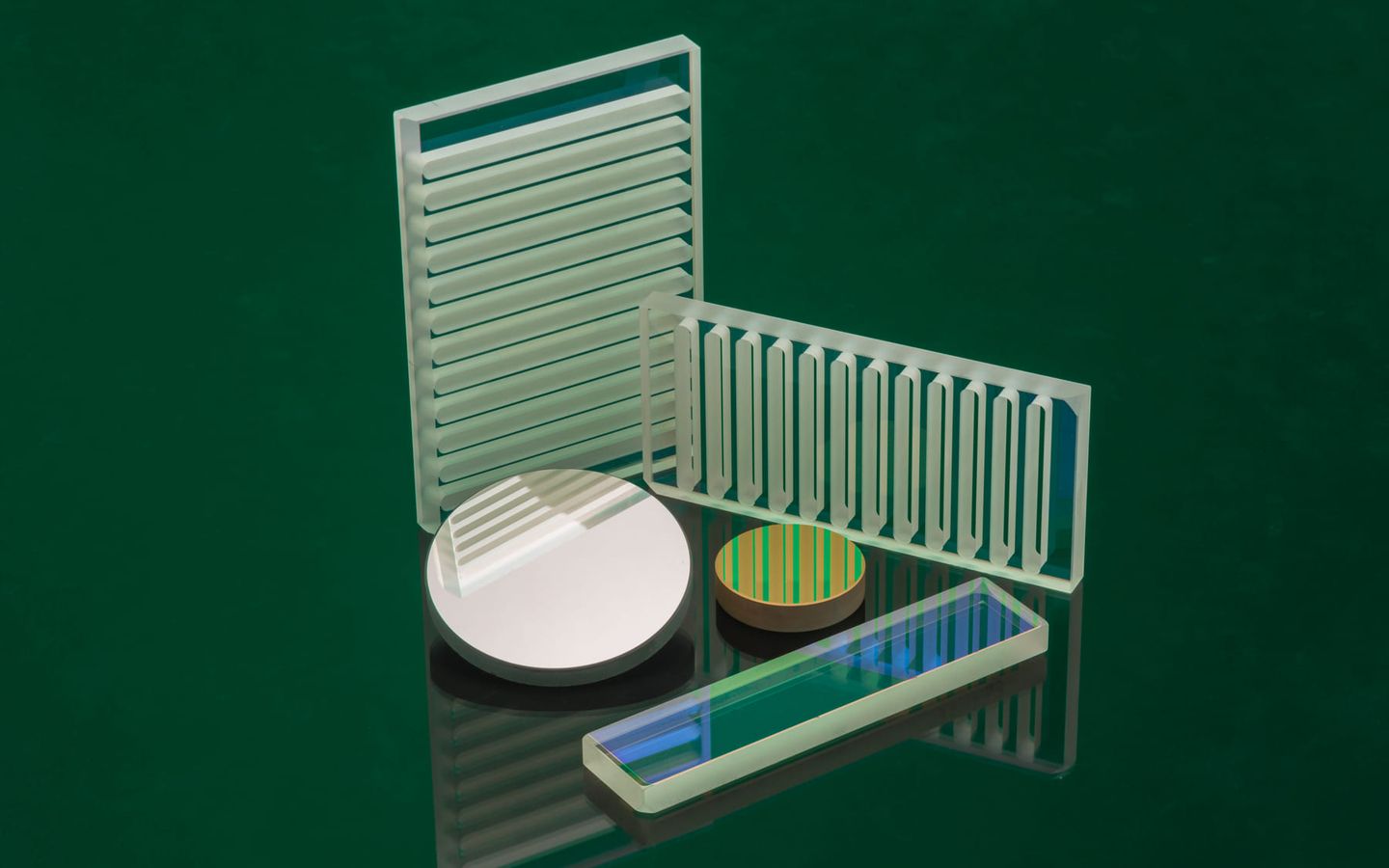
High-reflectivity mirrors paired with coatings chosen for wavelength, pulse conditions, and expected energy exposure. HLDT is IRD's shorthand for high laser damage threshold; LIDT is the term for the measurement, which ISO 21254 defines.

LDT exceeding 80 J/cm² at 1064 nm, 1 ms
Precision laser components manufactured by IRD Glass

Beamsplitters and filters

Transmission and reflection performance coordinated with substrate, angle of incidence, and the rest of the optical train.

Custom laser optics manufactured by IRD Glass

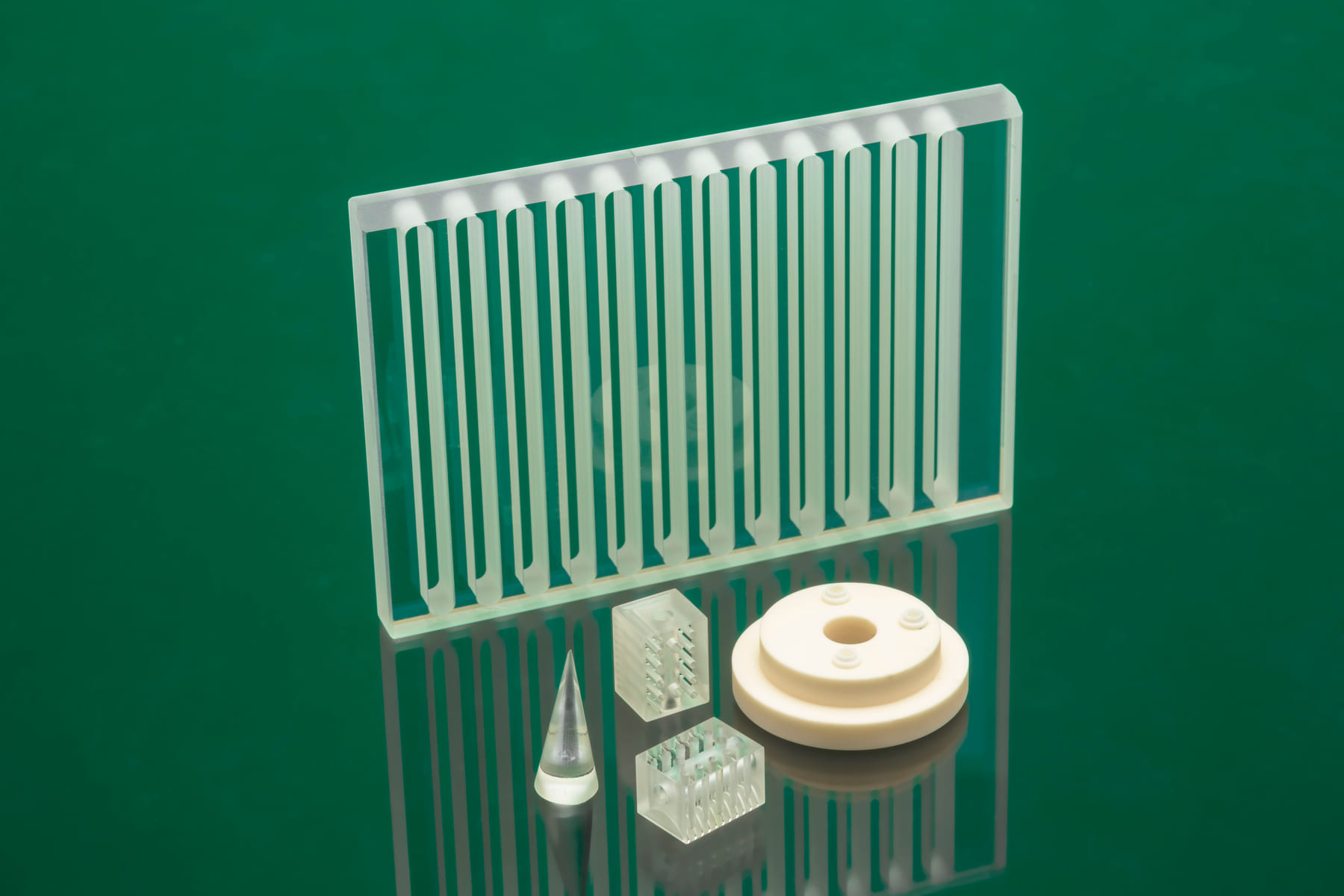
Spacers, tooling, and shields

Precision non-imaging components that protect, locate, and hold the laser path without creating another supplier interface.

Case study — high-power laser cutting mirror

The damage threshold was fixed at the slot edge, before any coating went on.

A global manufacturer of laser-based machine tools came to IRD after struggling to find a supplier who could hold both cost and quality on a large-area slotted mirror. In the design-for-manufacturability review, IRD's team identified that the sharp slot edges would shed fibers during cleaning, and that those fibers would become coating defects that pulled the damage threshold down. The customer added a 50 µm (0.002″) bevel — the maximum the required clear aperture allowed — and IRD built a cleaning process around it. The mirrors have consistently met the damage-threshold specification since. IRD is now the preferred supplier for the component, and one of only a few qualified for it worldwide.

Talk to an applications expert
Precision laser mirrors manufactured by IRD Glass
8 hrs → <1 hr
Cycle time per piece, after process development and a dedicated production cell
50 µm
Bevel added at the DFM review — 0.002 inch
Preferred
Supplier for this component, and one of only a few qualified worldwide
Process control

Why part five hundred looks like part one

Damage threshold is set long before the coating goes on — by subsurface damage, residual stress, polishing and cleaning residue, and contamination. These are the controls IRD holds across a production run.

Subsurface damage is removed, not polished over

Fabrication runs staged fixed-abrasive grinding and loose-abrasive lapping, each step removing the micro-cracks left by the one before it. IRD works to the optical-fabrication rule of thumb that subsurface damage runs roughly 0.3× the mean abrasive diameter, so the abrasive sequence is planned backwards from the required finish.

Polishing target for high-damage-threshold optics: better than 10 Å rms

Cleaning is specified per component, not per shop

Hand cleaning with isopropyl alcohol, cascaded detergent baths, deionized-water rinsing, oven baking, spin drying, proprietary solvent washing, and hydrofluoric acid etching for stress relief. Most high-damage-threshold optics get a cleaning process built for the part rather than a general optics clean.

Inspection runs in process, not only at the end

Non-destructive checks in production include stereo microscopy, high-intensity light against a dark background per MIL-PRF-13830B, interferometry for roughness and for flatness, differential interference contrast microscopy for defect analysis, and high-magnification polarized microscopy with stitching for large-area parts.

Destructive HF-etch testing during process development maps subsurface damage against abrasive size

Packaging protects the surface you paid for

Custom packaging supports the component on its edges or on non-critical surfaces outside the clear aperture, and holds it against shifting in transit.

Capability ranges.Specify what the system needs.

These are capability limits, not blanket grades. Quote each surface and dimension to what the system actually needs.

AttributeTypicalBest caseApplication note
Surface flatness1 wave< 1/20 waveWavefront-critical faces and mirrors
Surface roughnessRa < 1 µinRa < 2 ÅSuperpolished HR mirror faces; Ra < 5 Å is the general shop polishing capability
Parallelism30 arc sec< 5 arc secWindows, filters, and beam-steering optics
Dimensional tolerance±.005″±.0001″Finished geometry and mounting interfaces
Polished sizePrint-defined16″ diameterPolishing envelope; machining runs to 30″ × 16″ × 16″

These figures are IRD's published process capability across materials and geometries — not a guarantee for a given print. Material, geometry, clear aperture, and inspection method all move them, and every surface is quoted individually. IRD's published flatness and reflectivity values do not state a reference wavelength or angle of incidence: send your operating conditions and the team will confirm against those rather than against a datasheet.

Precision laser mirrors manufactured by IRD Glass
Cell-based production

One cell owns the optic from material through inspection.

Dedicated people, equipment, and floor space carry the program through machining, polishing, coating, and metrology — the cell owns the part from raw-material order to shipment. That reduces handoffs, keeps the process tied to the same print revision, and means your capacity is assigned rather than shared.

The IRD Advantage
20+
Years producing high-power laser components
98%+
On-time delivery, past decade
2
Minnesota facilities — ITAR-controlled work stays domestic
Application fit

Materials, forms, and uses

Use these lists to frame the first review. The drawing, environment, performance requirement, inspection method, and volume determine the final route.

Materials

  • Fused silica
  • Sapphire
  • Doped glass
  • Filter glass
  • Chalcogenides
  • Optical crystals

Components

  • Cavity reflectors
  • HLDT / HR mirrors
  • Beamsplitters
  • Splatter shields
  • Corner cubes
  • Optical filters

Coatings

  • High-reflection
  • Anti-reflection
  • HLDT
  • Metallic
  • Dielectric
  • Wavelength-specific stacks

Applications

  • Industrial lasers
  • Medical laser systems
  • Advanced manufacturing
  • Beam delivery
  • Alignment and metrology

Production assurance

ISO 9001:2015Certified quality management system covering both Minnesota facilities. The system is certified — an individual part is not.
ITAR registeredRegistered with the DDTC. Controlled programs are manufactured and stored domestically in Minnesota.
98%+ on-timeIRD-reported delivery performance, sustained across the past decade.
Review quality & certifications
Keep researching

Related products and industries

The finished component often crosses product categories. These pages cover the nearest materials, processes, and program contexts.

Precision laser reflectors manufactured by IRD Glass
Start with the print

Send us your custom laser optics requirement.

IRD's quoting checklist: application, product type, volume potential and schedule, material, dimensions, surface quality, coatings, assembly, cleaning, and packaging. For a new design, the technical team runs a no-cost Design for Manufacturability review before quoting, then estimates prototype and production volumes separately.

Or call 320.693.7217. If you are qualifying a second source for a part already in production, say so — IRD asks for that work directly.
Custom Laser Optics for OEM Systems | IRD Glass