IRD GLASS
Products / Flat optics

Precision Flat Optics

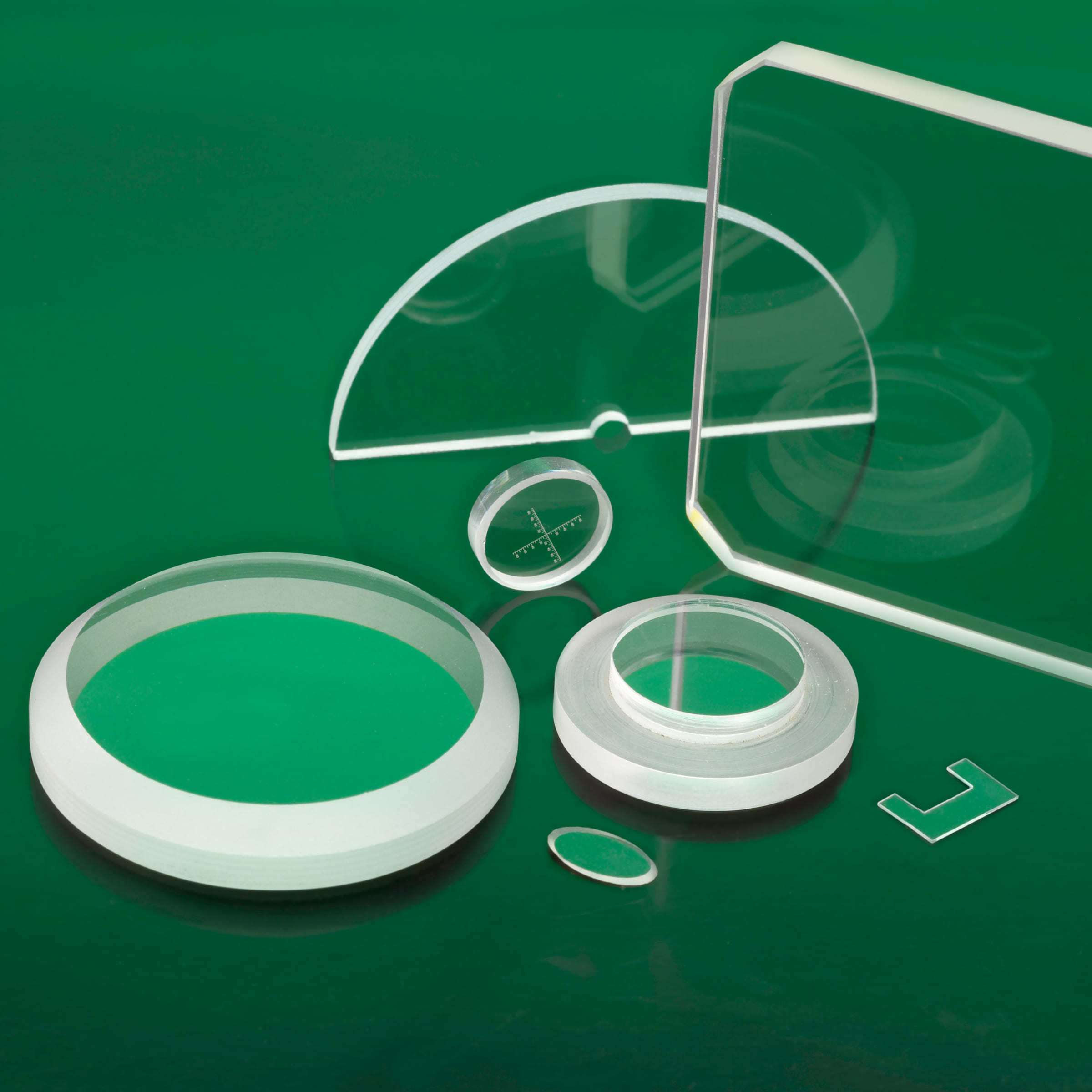
Windows, mirrors, filters, sight glass, wedges, tooling, and reticles manufactured across medical, laser, aerospace, defense, sensor, inspection, and process-control systems.

IRD manufactures to your print. Material, flatness, parallelism, surface quality, edge condition, patterned features, and coating are reviewed as one finished component before quoting — and on a new design that review is free of charge.

Flatness
1/10 wave+
IRD reports regularly achieving 1/10 wave or better on flat optics; its best-case polishing capability is better than 1/20 wave. Neither figure states a reference wavelength — send your measurement condition and the team will confirm against it.
Parallelism
.00003″ / 9″+
IRD's published figure: .00003 inch across a 9-inch-or-larger substrate. Smaller parts are quoted against the polishing capability of better than 5 arc seconds.
Window size
.100″ to 16″
Published window range, .100 to 16 inches high in thicknesses from .008 to 4 inches, across N-BK7, B270, borosilicate, fused silica, fused quartz, high-index glass, sapphire, silicon, and other IR materials.

What we manufacture

Plane surfaces, different optical jobs

A flat optic may transmit, reflect, protect, filter, measure, or establish a reference. The controlling specification changes with the job.

Flat component families

Four jobs a plane surface does inside a system — transmit, reflect, filter, and reference — each with a different attribute carrying the tolerance.

Flat optical components

Windows and sight glass

Plane-parallel plates for UV, visible, and IR transmission, sensor protection, debris shielding, and environmental separation between a process and the optics watching it.

From .100″ to 16″ high and .008″ to 4″ thick
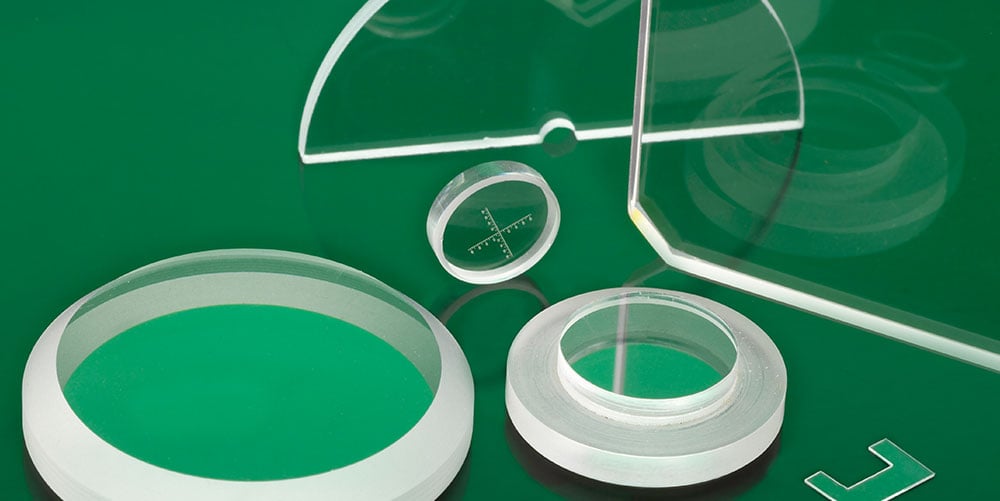
Precision optical windows manufactured by IRD Glass

Mirrors

First- and second-surface flat and laser mirrors for interferometry, beam steering, folding, and imaging — from protected aluminium through high-laser-damage-threshold stacks, certified to whatever data the program requires.

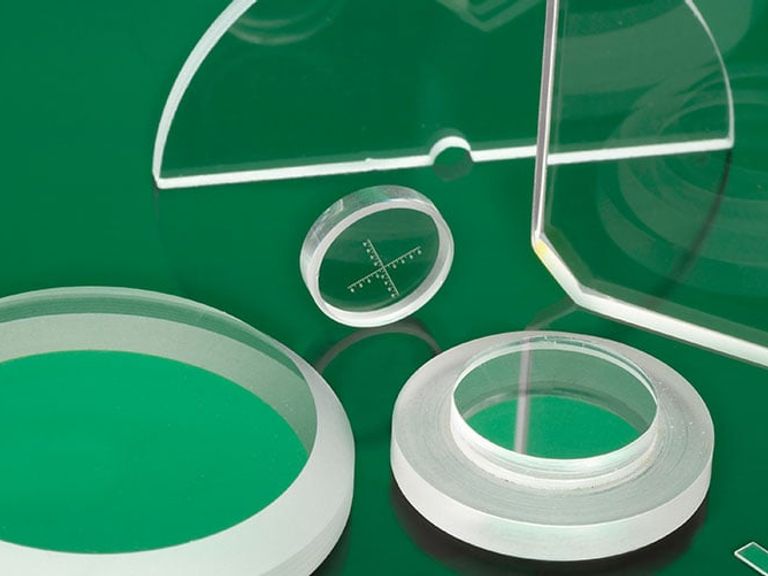
Flat optical components manufactured by IRD Glass

Filters

Filter glass from Schott, Kopp, Ohara, Hoya, and others, plus in-house thin-film coatings from UV through IR, for transmission, blocking, and wavelength-control requirements.

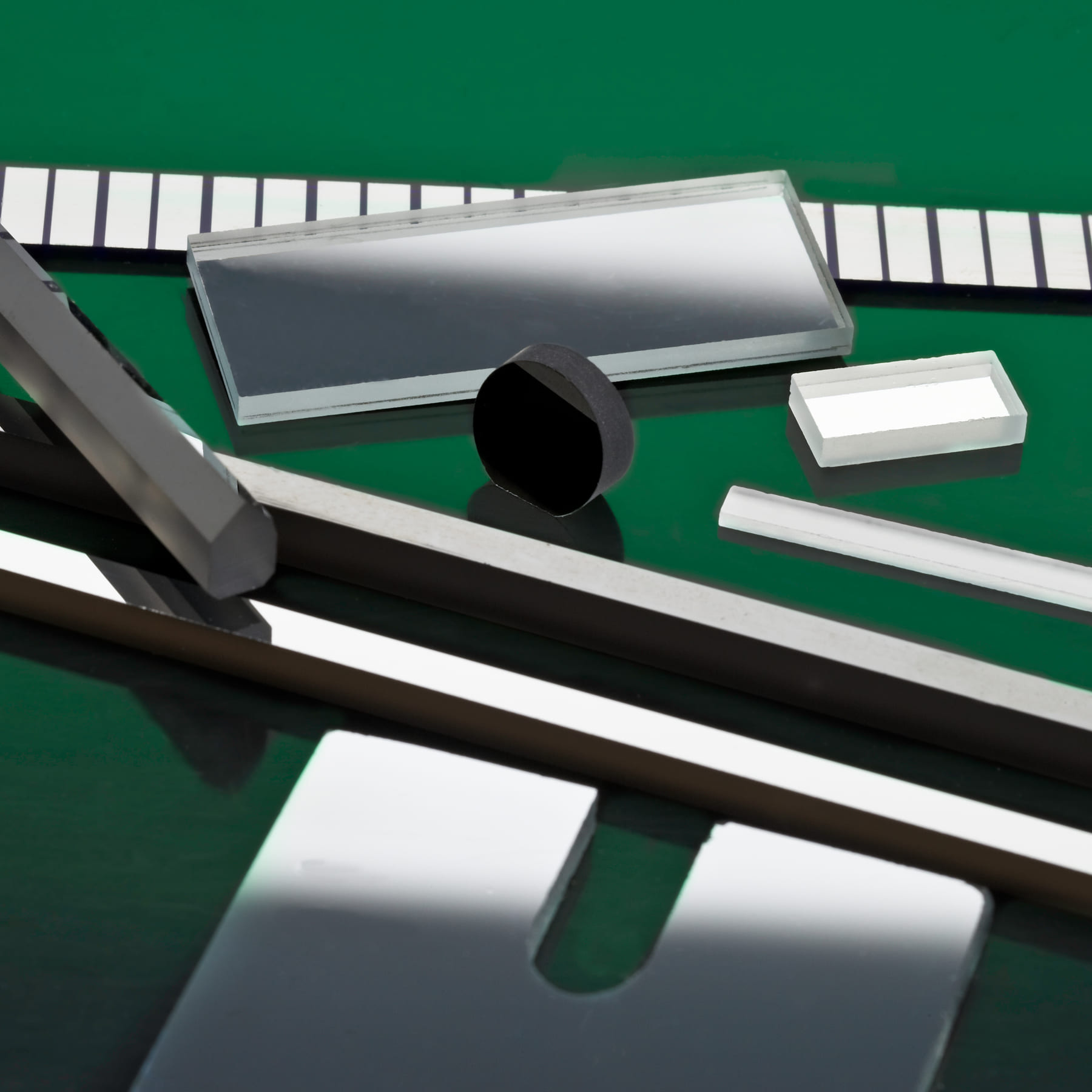
Precision optical mirrors manufactured by IRD Glass

Reticles and patterned coatings

Chrome, precious-metal, and aluminium patterns for filters, masks, reference gauges, and datums, and precision reticles for semiconductor, inspection, and medical systems.

Details down to sub-micron line widths
Case study — large-area precision mirror

A large-area mirror that kept taking the customer's line down.

A globally positioned high-power laser OEM was fighting quality, delivery, and pricing problems on a very unique large surface area precision mirror. The result was frequent line downs, long cycle times, and no way to patch the supply chain and ramp production. IRD designed a custom production cell around the part, invested in the unique equipment needed to hold the quality specification, and cross-trained employees and hired new technicians so the cell was staffed to run it. IRD met the target price and the quality requirement while cutting cycle time by 800%, and remains the preferred supplier for the component to this day — one of only a few qualified for it anywhere in the world.

Talk to an applications expert
Flat optical components manufactured by IRD Glass
800%
Cycle-time reduction after a dedicated production cell was built around the part
Preferred
Supplier for the component to this day, and one of only a few qualified globally
Target
Price and quality specification both met, after the incumbent vendor missed on both
Process control

The flat surface is the easiest one to lose

Flatness and parallelism are separate controls, and both are lost more often to fixturing and handling than to the polish itself. These are the controls IRD holds across a production run.

Double-side lapping avoids clamping stress

Double-side lapping machines both faces at once between a floating upper plate and a lower plate, doubling throughput and — more importantly — avoiding the clamping stress that single-side work introduces. IRD's published lapping capability runs to ±.000010 inch on flatness and parallelism.

Pitch polishing controls the edge roll

Pitch plates hold a semi-fluid surface, grooved by hand or machine so the polishing slurry can reach the whole component. The method both reaches Ra under 5 Å and minimises the surface deformation at the edge roll that makes an otherwise flat part unusable near its aperture edge.

Pitch polishing covers components from 20 mm to 600 mm in diameter

Flatness is measured interferometrically, not inferred

The inspection floor runs Zygo GPI, Zygo NewView, Zygo Verifier, Nikon 6D, and Wyko 6000 PS interferometers, alongside OGP CNC vision inspection and toolmaker's scopes. A flatness number without a stated measurement condition is a claim, not a specification.

Patterning and coating are planned before polishing

Masking, fixture contact, edge handling, and witness sampling for a patterned or coated flat all depend on decisions made before the surface exists. Deciding them afterwards is how a good polish becomes a rejected coating run.

Capability ranges.Specify what the system needs.

Flatness and parallelism are separate controls. State the wavelength, aperture, measurement method, and mounting condition with the drawing.

AttributeTypicalBest caseApplication note
Surface flatness1 wave< 1/20 waveWavefront-critical faces and mirrors
Parallelism30 arc sec< 5 arc secWindows, filters, and beam-steering optics
Surface roughnessRa < 1 µinRa < 5 ÅHigh-energy and scatter-sensitive applications
Dimensional tolerance±.005″±.0001″Finished geometry and mounting interfaces

These are IRD's published process capability figures across materials and geometries, not a guarantee for a given print. Material, aperture, thickness, and inspection method all move them, and every surface is quoted individually. IRD's published flatness and parallelism values do not state a reference wavelength or measurement condition — send yours and the team will confirm against those rather than against a datasheet.

Flat optical components manufactured by IRD Glass
Cell-based production

A flat part can carry the tightest requirement in the assembly.

One cell controls the full route — blanking, machining, grinding, lapping, polishing, patterning, coating, and inspection — so a handoff between two suppliers does not undo the surface the previous process created. The cell owns the part from raw-material order to shipment.

The IRD Advantage
.00003″
Parallelism achieved across a 9-inch-plus substrate
16″
Polishing envelope diameter; machining runs to 30″ × 16″ × 16″
98%+
On-time delivery, past decade
Application fit

Materials, forms, and uses

Use these lists to frame the first review. The drawing, environment, performance requirement, inspection method, and volume determine the final route.

Components

  • Windows
  • Mirrors
  • Filters
  • Sight glass
  • Wedges
  • Reticles

Materials

  • N-BK7
  • B270
  • Borosilicate
  • Fused silica
  • Sapphire
  • Silicon and IR materials

Finishes

  • Protected metal mirrors
  • HLDT
  • AR / BBAR
  • Patterned metal
  • Custom spectral coatings

Production assurance

ISO 9001:2015Certified quality management system covering both Minnesota facilities. The system is certified — an individual part is not.
ITAR registeredRegistered with the DDTC. Controlled programs are manufactured and stored domestically in Minnesota.
98%+ on-timeIRD-reported delivery performance, sustained across the past decade.
Review quality & certifications
Keep researching

Related products and industries

The finished component often crosses product categories. These pages cover the nearest materials, processes, and program contexts.

Flat optical components
Start with the print

Send us your precision flat optics requirement.

Send the drawing with the aperture and thickness, the flatness and parallelism requirements and the wavelength and method they are measured at, scratch-dig per face, substrate, any pattern or coating, mounting condition, annual volume, and schedule. For a new design, the technical team runs a no-cost Design for Manufacturability review before quoting.

Or call 320.693.7217. If you are qualifying a second source for a flat already in production, say so — IRD asks for that work directly.