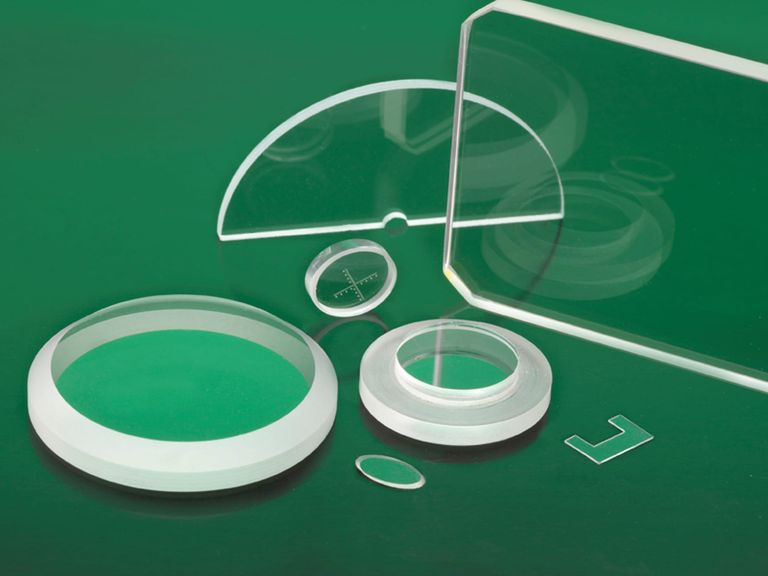
Windows
Protective and transmitting apertures for infrared cameras, sensors, and detection systems, including sapphire and spinel where the environment is abrasive or hot as well as optically demanding.

IRD Ceramics performs core IR fabrication in house. Coating, assembly, inspection, and any qualified outside process are scoped as one route before quoting, with a no-cost manufacturability review for a new design.
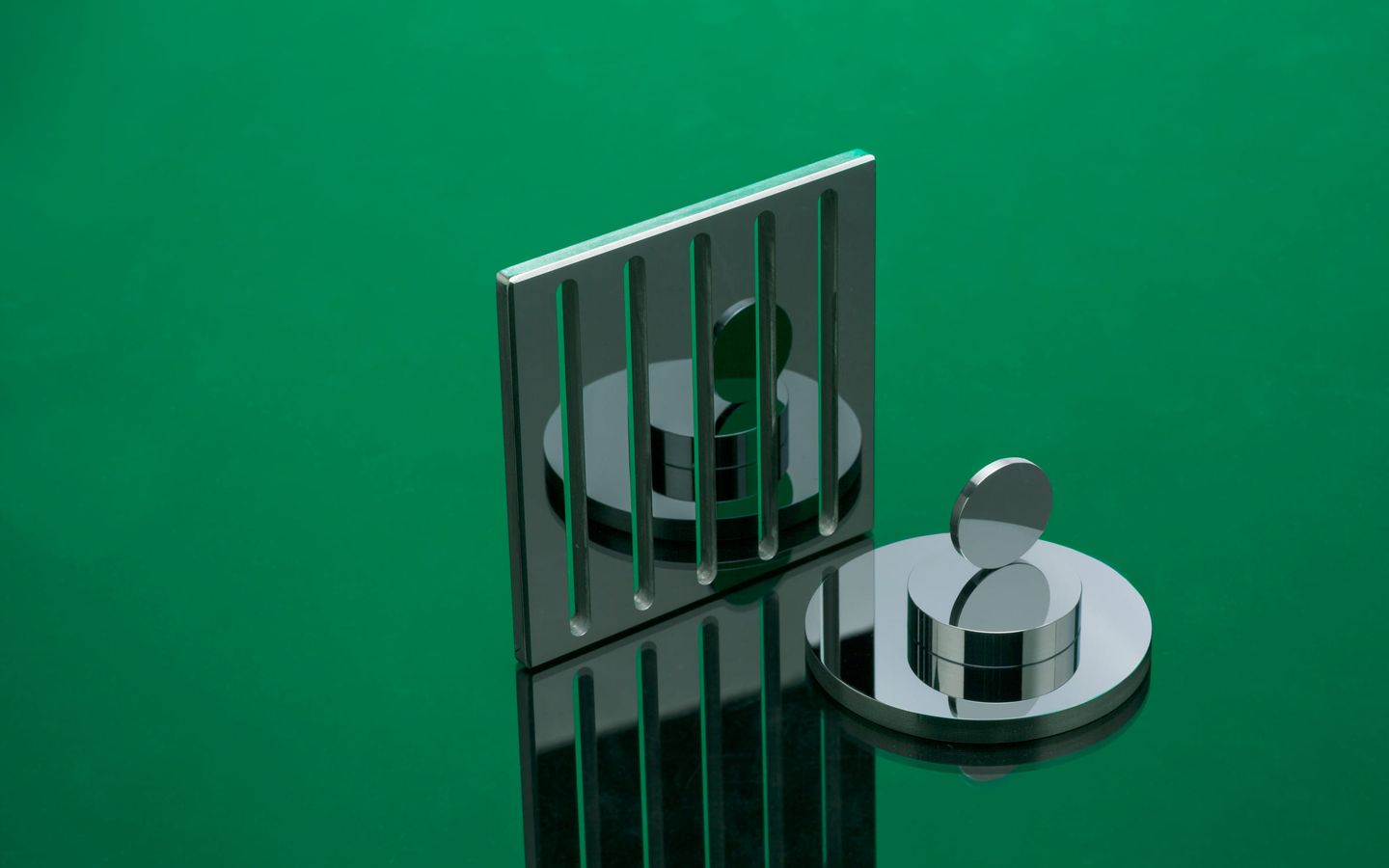
Transmission band matters, but so do mounting, thermal behavior, weight, coating, assembly, and how the finished optic will be inspected.
Protective and transmitting apertures for infrared cameras, sensors, and detection systems, including sapphire and spinel where the environment is abrasive or hot as well as optically demanding.
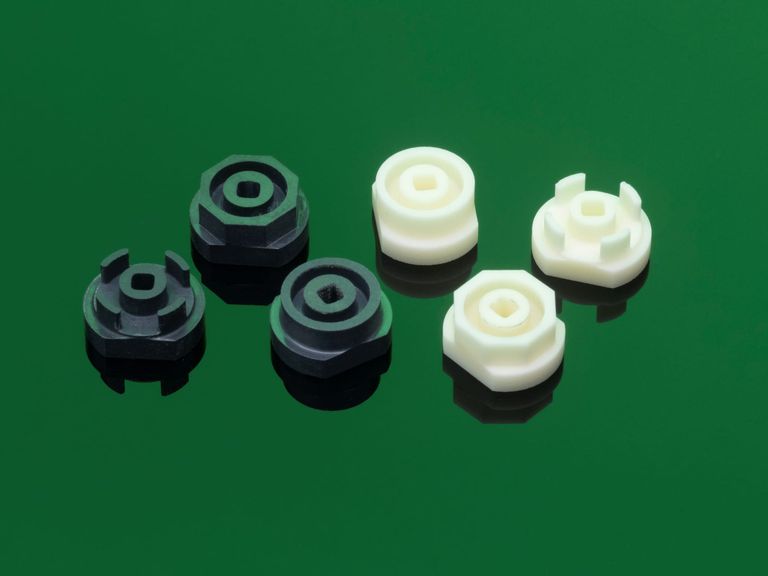
Simple and complex custom IR lens geometry fabricated and assembled around the system requirement, with quick prototype turnaround and CAD/CAM support.
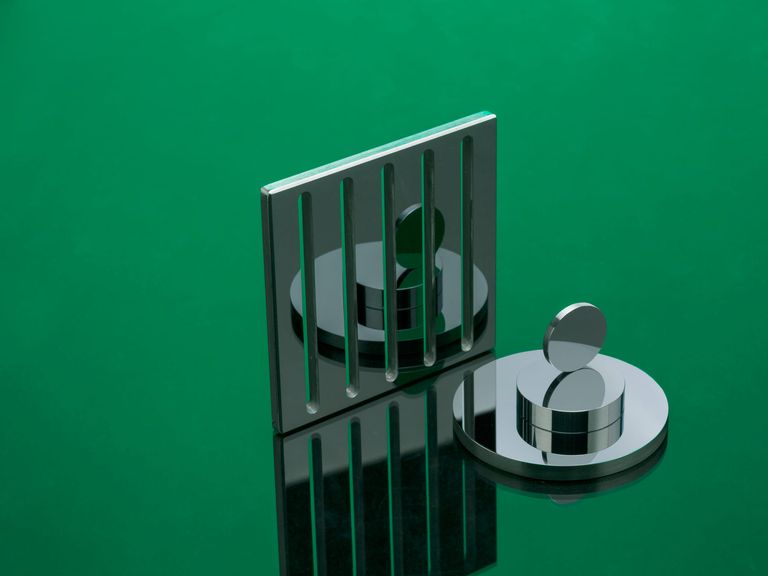
Silicon and other IR mirror substrates polished and coated for commercial and controlled applications, from low-cost volume mirrors up to laser-quality parts.
Example: 2″ silicon mirror held better than 1/2 wave flatness
Simple and complex lens assemblies, IR coating, packaging, and point-of-use preparation, developed with the customer's process rather than handed over at the component boundary.
These are IRD's published capability limits across materials and geometries, not a grade every part ships to. Open the process that controls your critical surface and quote against that one.
IR material choice changes machining, polishing, coating, mounting, handling, and inspection. Review the complete requirement before freezing the substrate.
| Attribute | Typical | Best case |
|---|---|---|
| Silicon mirrorHigh-power laser-quality IR example | 2″ diameter | Better than 1/2 wave |
| Surface flatnessWavefront-critical faces and mirrors | 1 wave | < 1/20 wave |
| ParallelismWindows, filters, and beam-steering optics | 30 arc sec | < 2 arc sec |
| Surface roughnessHigh-energy and scatter-sensitive applications | Ra < 1 µin | Ra < 2 Å |
Infrared substrates behave nothing like optical glass. Choosing one commits the program to a machining route, a polishing route, a coating chemistry, and a mounting scheme all at once.
Spinel is a durable polycrystalline transparent ceramic with optical transparency from the near ultraviolet through the mid-wave infrared. Sapphire transmits from UV into the mid-infrared while resisting heat, chemical attack, and abrasion, which is what puts both into windows that also have to survive their environment.
Silicon holds its mechanical strength and shock resistance to around 1,400 °C and is used in aerospace for its chemical corrosion resistance compared with other hard ceramics. It is fabricated with hard-material tooling and slurries, on the same equipment set as IRD's technical ceramics work.
IRD offers low- and high-volume production, design assistance, CAD/CAM support, simple and complex lens assemblies, IR coating, and quick prototype turnaround. Integrating those operations with the customer's is what produces fewer parts and lighter-weight lenses rather than simply a cheaper line item.
Core IR fabrication is performed in the USA by an ITAR-registered manufacturer, for components used by Homeland Security, Border Patrol, defense, and security customers as well as commercial OEMs. Controlled programs are manufactured and stored domestically in Minnesota.
IRD's published materials, coating, and inspection equipment lists.
The answers an applications engineer would give you on the first call.
Start a quoteIt belongs to that part and that size, IRD's published example is high-power laser-quality 2″ silicon mirrors held better than 1/2 wave flatness. Flatness on an IR substrate moves with diameter, thickness, and material, so send yours.
Sapphire, silicon, germanium, chalcogenides, zinc selenide, barium fluoride, calcium fluoride, and spinel are the materials IRD names publicly. Each one machines, polishes, coats, and mounts differently, so the material is part of the manufacturability review rather than a downstream detail.
IRD's quoting checklist: application, product type, volume potential and schedule, material, dimensions, surface quality, coatings, assembly, cleaning, and packaging. Attach the drawing. For a new design the technical team runs a no-cost Design for Manufacturability review before quoting, then estimates prototype and production volumes separately.
No. IRD manufactures to your print or performance requirement and contributes material, process, and manufacturability input, the design stays with your team. When a print calls for tighter tolerances than the application requires, IRD will flag the potential over-specification, since it can add unnecessary cost. Final optical design decisions remain yours.
Machining runs to 30″ × 16″ × 16″, polishing to 36″ diameter, grinding to 24″ diameter at 6″ height, lapping to 13.3″ diameter, waterjet to 40″ × 24″ × 2″, and dicing to 8″ diameter at .300″ thick. Larger geometry is quoted against whichever process controls the critical surface.
IRD applies basic anti-reflective and metallic coatings in-house for quick turnaround. Other coating requirements are handled through select, vetted coating partners. Name the coating target in the RFQ and the team will confirm the route before quoting.
IRD is registered with the Directorate of Defense Trade Controls, and controlled programs are manufactured and stored domestically across the Litchfield and Alexandria, Minnesota facilities. Both plants operate under quality systems certified to ISO 9001:2015 and ISO 13485:2016 for ultra-high-precision glass, optical, and ceramic components.
Packaging is tailored to the part and can include multi-layer foam, custom corrugated packaging, gel packs for sensitive optics, and military-grade cases. Components are supported on edges or non-critical surfaces outside the clear aperture and held against shifting in transit.
Use these IRD references when reviewing infrared optical components requirements.
What IRD customizes on sapphire optics for the aerospace and defense contractors building remote piloted aircraft, size, thickness, parallelism, surface accuracy, roughness, and coating.
ArticleApplication noteThe mix a LiDAR protective window has to hit at once, near-infrared transmission, visible-light rejection, plus strength, thermal, and impact resistance against rock, rain, hail, and thermal shock.
ArticleWhite paperLegacy technical paper. Company-profile details may be outdated; use current site pages for IRD facts. IRD's design guidance for the super-hard IR-transmitting materials, sapphire, spinel, and aluminum oxynitride, covering complexity, finish, precision, clearance features, and material specification.
PDF
Send the drawing with the spectral band and transmission requirement, substrate if you have chosen one, clear aperture, surface figure and roughness, coating target, mounting and thermal environment, any export-control status, annual volume, and schedule. For a new design, the technical team runs a no-cost Design for Manufacturability review before quoting.
Or call 320.693.7217. If the program is ITAR-controlled, say so at first contact, IRD is registered with the DDTC and keeps that work domestic.