IRD GLASS
Products / Beam shaping

Laser Homogenizers & Light Pipes

Custom light pipes and laser homogenizers that mix and redistribute energy into a more uniform output for illumination, laser delivery, sensing, projection, and process systems.

IRD manufactures square, round, rectangular, hexagonal, and octagonal components in straight and tapered designs, with end faces held perpendicular or at a specified precision angle. Send the input beam and the output you need, and the technical team reviews it for manufacturability before quoting — free of charge on a new design.

Cross sections
Round to 8-sided
Square, round, rectangular, hexagonal, and octagonal. IRD reports that a hexagonal cross section delivers about 35% greater transmission than an equivalent-size rectangular rod.
Profiles
Straight + tapered
Tapered designs reduce the numerical aperture of the output, but tapered efficiency depends on dimensional precision — the better output costs more to produce.
Materials
Silica / N-BK7 / sapphire
The common choices. The material follows the wavelength band being mixed; homogenizers transmit and mix across UV, visible, and infrared depending on the substrate.

What we manufacture

Geometry controls the output

Cross section, taper, length, surface finish, entrance and exit faces, and material determine how the light mixes and how the component fits the system.

Cross sections and faces

More facets buy efficiency and cost handling, inspection, and edge risk. The geometry decision is where that tradeoff gets made.

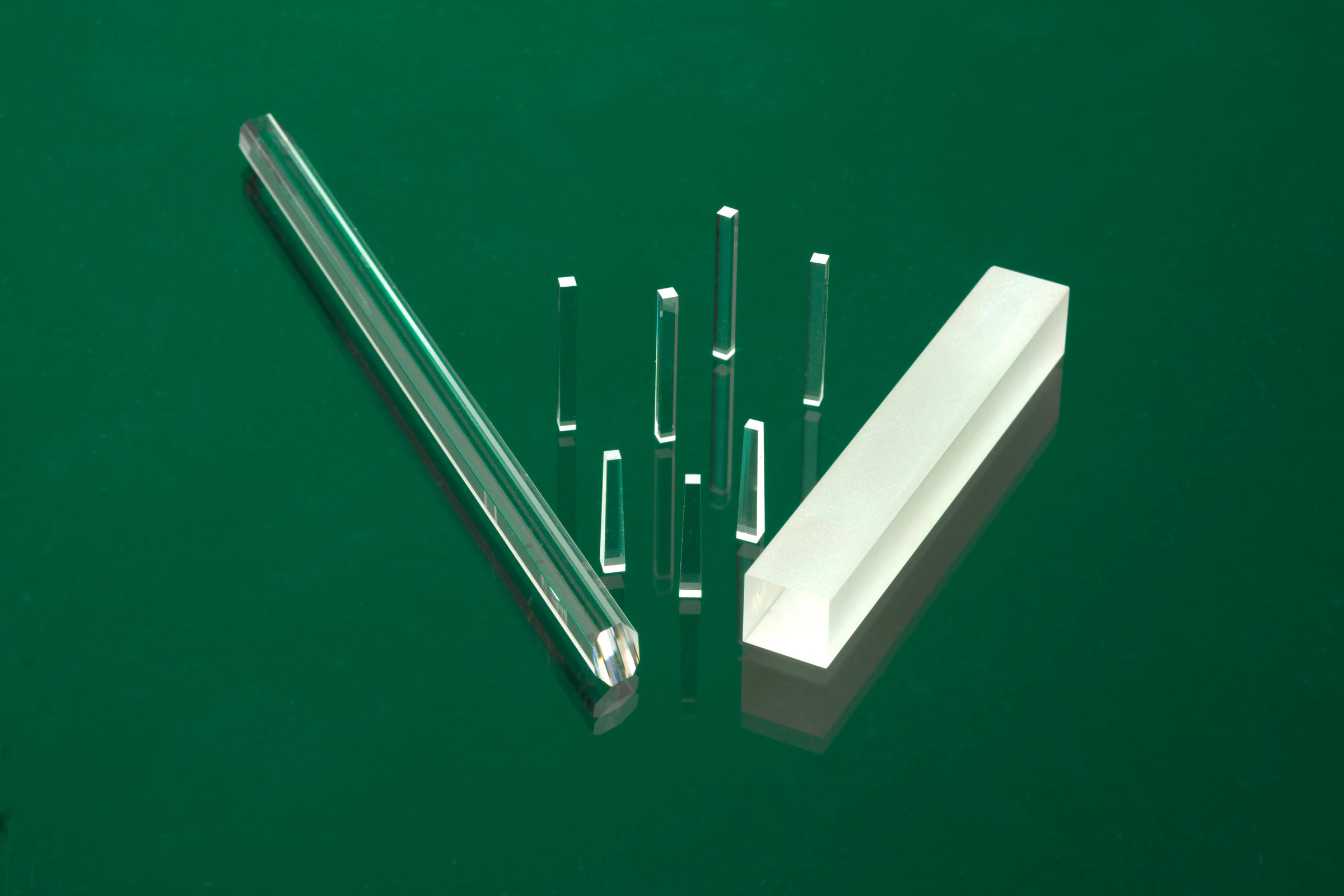
Micro light pipes next to a coin for scale

Square and rectangular

Straight or tapered light pipes for common rectangular illumination and sensor formats — the simplest to produce and to inspect.

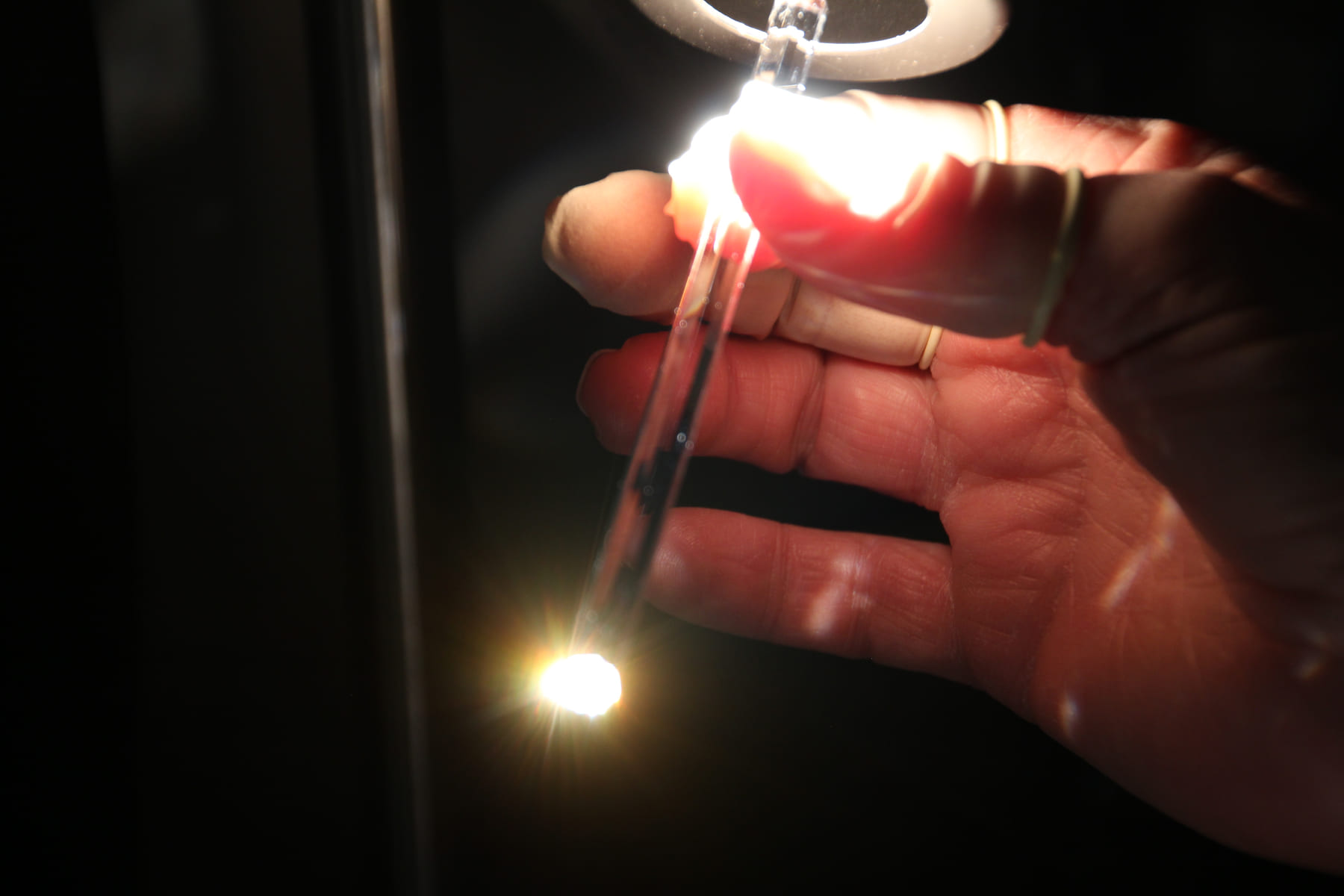
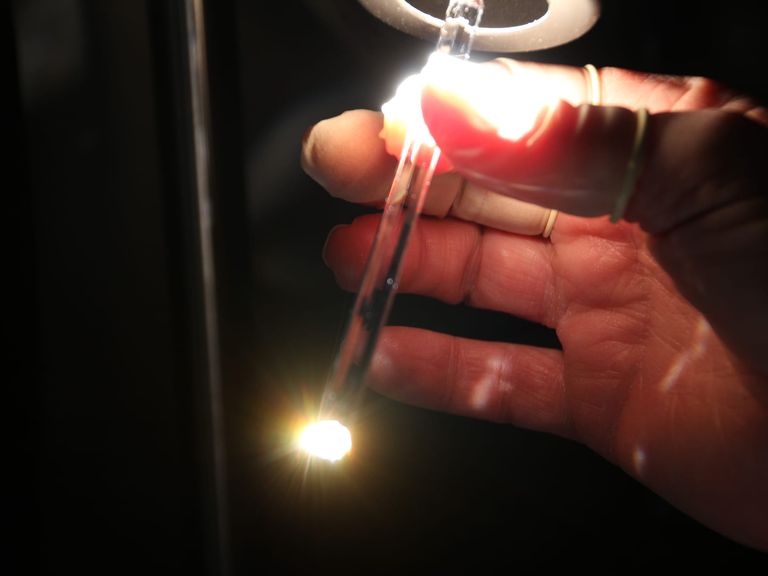
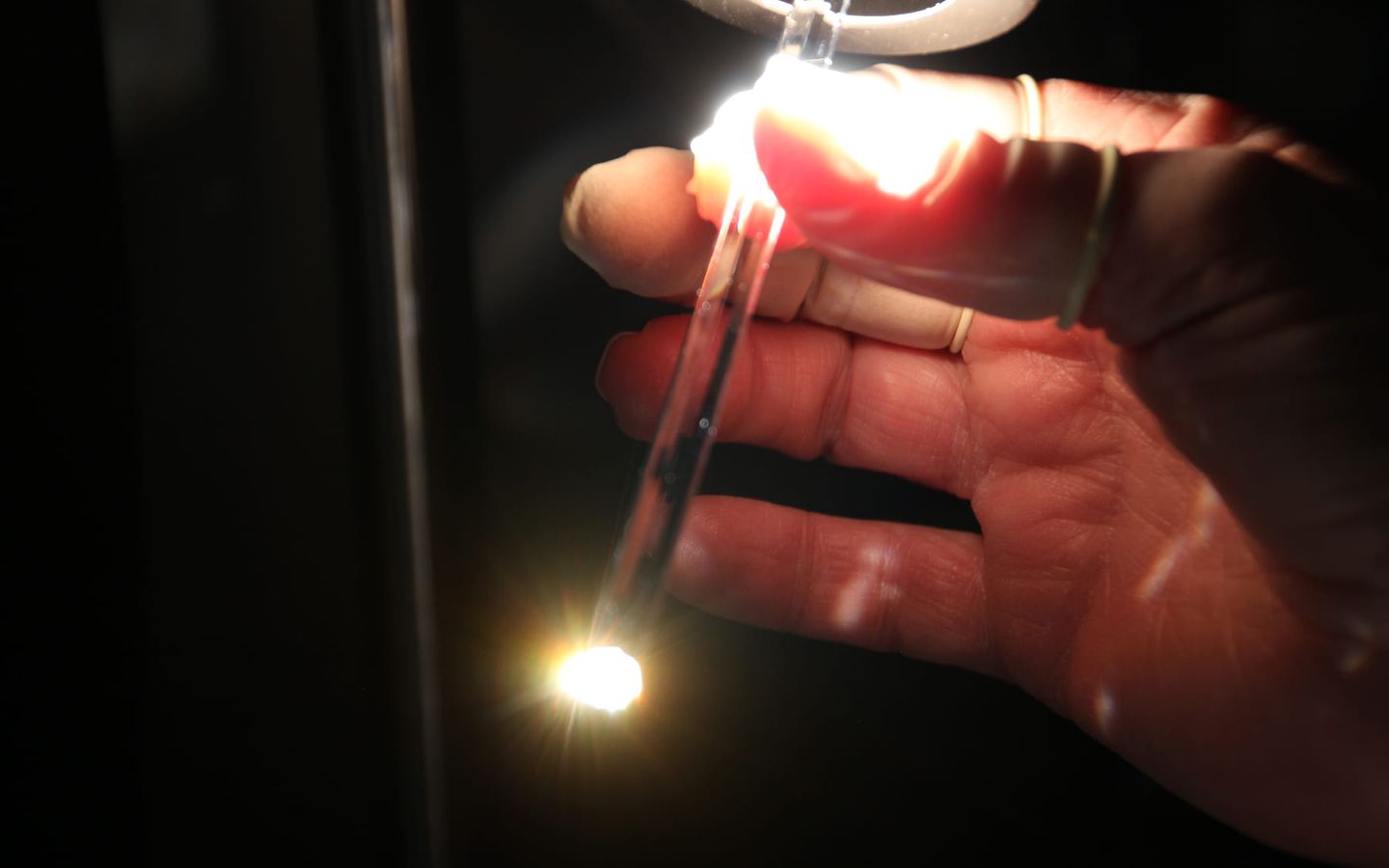
An end-lit homogenizer transmitting light

Round

Cylindrical forms for compact beam delivery and assemblies built around circular mounts.

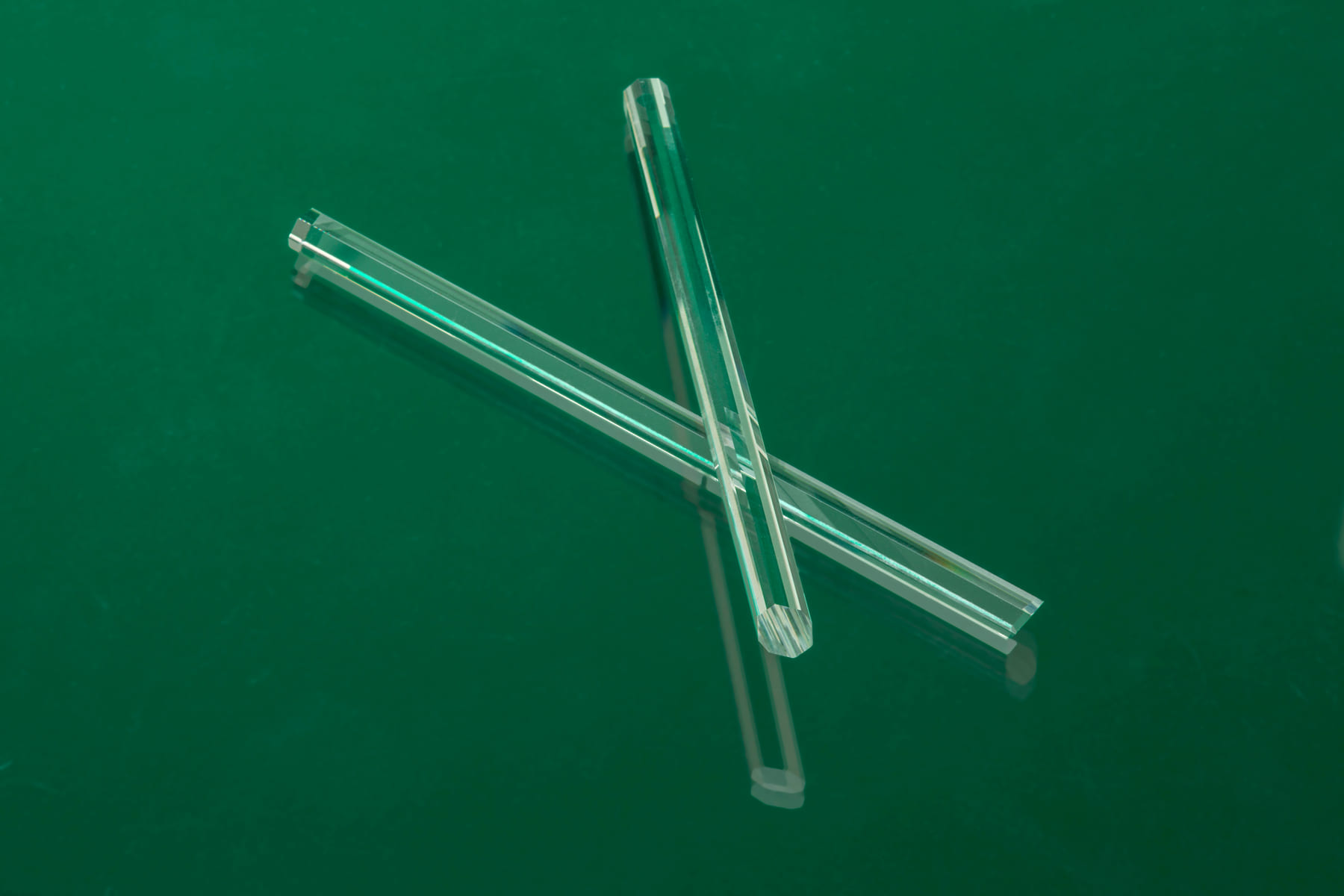
Hexagonal light pipes manufactured by IRD Glass

Hexagonal and octagonal

Multi-sided custom cross sections for specific mixing, packaging, and throughput requirements. More facets raise transmission and also raise handling and inspection cost.

A hexagonal cross section transmits about 35% more than an equal-size rectangular rod
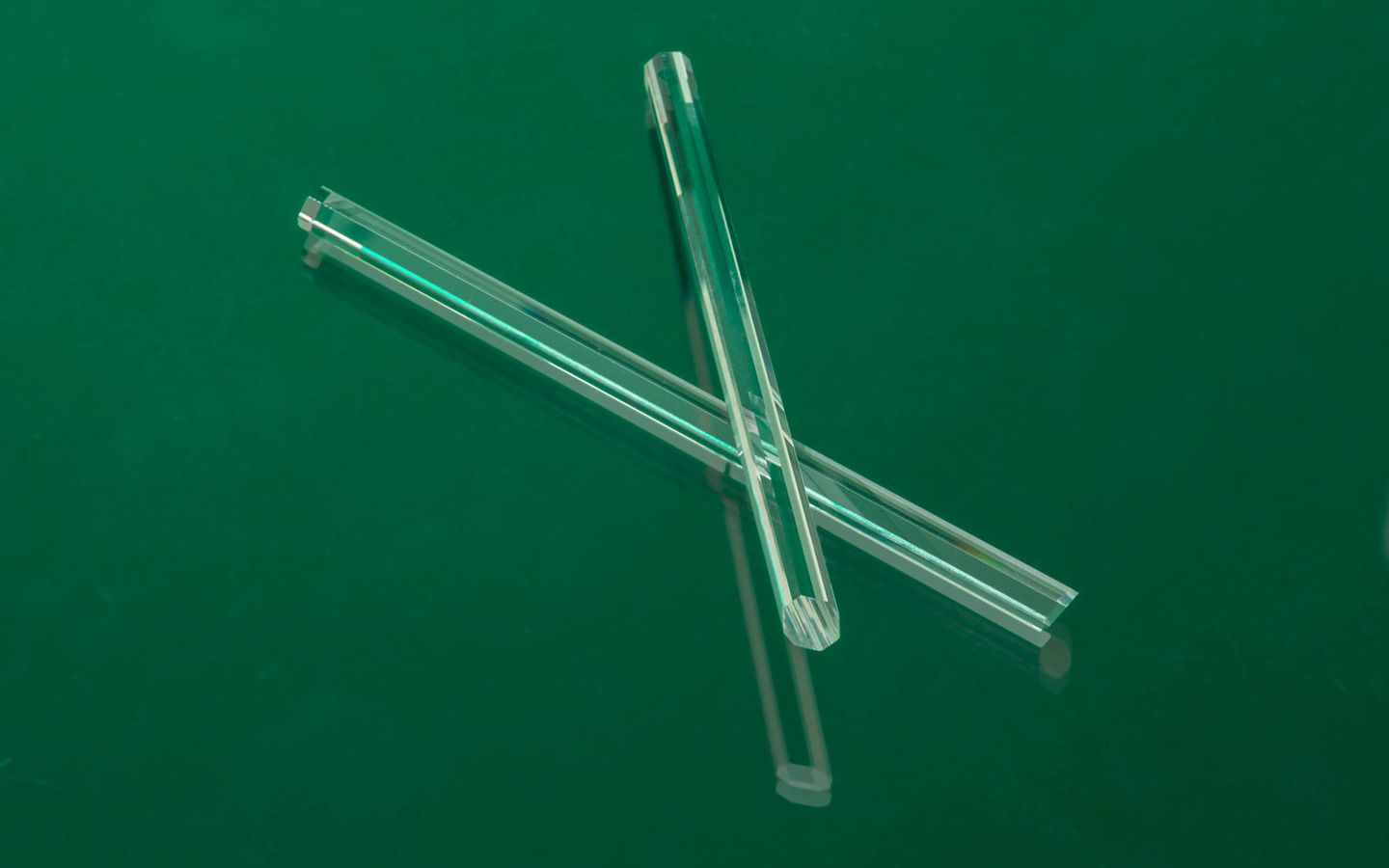
Laser homogenizers and light pipes manufactured by IRD Glass

Angled faces

Entrance and exit faces manufactured perpendicular or at controlled angles, including Brewster-angle designs for polarized light, with custom coatings applied to end faces where optical noise matters.

Case study — octagonal homogenizer for a multi-kilowatt laser

Twice the edges, several kilowatts through them, and a very brittle fused silica.

A major European laser manufacturer was struggling to secure reliable delivery of an octagonal homogenizer. The application handled laser beams of several kilowatts, so the design carried stringent surface and edge quality specifications, and the material was a very pure, low-loss, very brittle type of fused silica. Having already produced a different high-quality component for another business unit of the same manufacturer, IRD was asked to review the new application. It invested in a dedicated production cell with custom fixturing, new processes, and months of training in both manufacturing and inspection. Out of a 25-rod sample manually inspected at the customer's own European facility, only one chip larger than 30 microns was found across all the flat and angled edges.

Talk to an applications expert
An end-lit homogenizer transmitting light
1 of 25
Rods with any edge chip over 30 microns, in the customer's own incoming inspection
kW-class
Beam power the surface and edge specification had to survive
Dedicated cell
Custom fixturing, new processes, and months of manufacturing and inspection training
Process control

Total internal reflection is unforgiving about edges

A homogenizer works because light stays inside it. Every scratch, pit, chip, and dimensional variation on a reflecting wall is a place for light to leave — which makes edge condition, not surface figure, the specification that usually decides the part.

Every defect on a reflecting wall leaks light

Scratches or pits on planar surfaces, chips along edges, and even variations in surface dimensions all let light escape and cut efficiency. More facets mean more handling, and more handling means more opportunity to create the loss-inducing chip that was not there when the part was polished.

Facet count is an efficiency-versus-cost decision

A hexagonal cross section provides roughly 35% greater transmission than an equivalent-size rectangular rod. An octagonal rod has twice the surfaces and edges of a rectangular one and is substantially more complex to produce — IRD manufactures them in volume, but the tradeoff belongs in the design review.

End faces are engineered, not just polished

Input faces are usually made perpendicular to the side faces to make coupling easier. Output faces are often tilted to Brewster's angle to minimise reflection loss at that surface, and many designs carry a custom coating on the end faces to reduce optical noise in the system.

Quality is controlled rather than inspected

IRD's stated philosophy is to build quality into each operation rather than sort for it at the end, backed by investment in custom automation to reduce cost, more effective polishing processes to raise yield, and higher-precision inspection equipment.

IRD reports a zero parts-per-million defect rate over several years

Capability ranges.Specify what the system needs.

Homogenizer requirements are application-specific. Include the input beam, desired output, wavelength, material, envelope, face angles, and mounting scheme.

AttributeTypicalBest caseApplication note
Surface flatness1 wave< 1/20 waveWavefront-critical faces and mirrors
Parallelism30 arc sec< 5 arc secWindows, filters, and beam-steering optics
Surface roughnessRa < 1 µinRa < 5 ÅHigh-energy and scatter-sensitive applications
Dimensional tolerance±.005″±.0001″Finished geometry and mounting interfaces

These are IRD's published general optical process capability figures, not homogenizer-specific guarantees. On a light pipe the controlling specification is usually edge and wall condition rather than figure, and it is agreed per program alongside the acceptance method. Every geometry is quoted individually; no reference wavelength is stated on the published flatness figures.

An end-lit homogenizer transmitting light
Cell-based production

Uniform output begins with a manufacturable optical path.

IRD reviews the beam-shaping requirement through both optical and fabrication lenses, so the specified geometry can be polished, measured, coated, mounted, and repeated in production. Teams and specialists are dedicated to high-performance homogenizers and carry responsibility for the whole route — from ordering the raw material to shipping, including coating.

The IRD Advantage
35%
Greater transmission from a hexagonal cross section versus an equal-size rectangular rod
Thousands
Straight and tapered homogenizers produced across shapes and sizes
98%+
On-time delivery, past decade
Application fit

Materials, forms, and uses

Use these lists to frame the first review. The drawing, environment, performance requirement, inspection method, and volume determine the final route.

Shapes

  • Square
  • Round
  • Rectangular
  • Hexagonal
  • Octagonal
  • Custom cross section

Materials

  • Fused silica
  • N-BK7
  • Sapphire
  • Application-selected optical glass

Applications

  • Uniform illumination
  • Laser delivery
  • Projection
  • Wafer inspection
  • UV lithography
  • Polarized systems

Production assurance

ISO 9001:2015Certified quality management system covering both Minnesota facilities. The system is certified — an individual part is not.
ITAR registeredRegistered with the DDTC. Controlled programs are manufactured and stored domestically in Minnesota.
98%+ on-timeIRD-reported delivery performance, sustained across the past decade.
Review quality & certifications
Keep researching

Related products and industries

The finished component often crosses product categories. These pages cover the nearest materials, processes, and program contexts.

Hexagonal light pipes manufactured by IRD Glass
Start with the print

Send us your laser homogenizers & light pipes requirement.

Send the input beam and the output you need, wavelength, material, cross section and whether it is straight or tapered, length and envelope, entrance and exit face angles, any end-face coating, the edge and surface specification with its acceptance method, annual volume, and mounting scheme. For a new design, the technical team runs a no-cost Design for Manufacturability review before quoting, then estimates prototype and production volumes separately.

Or call 320.693.7217. If you have a frozen design already in production and want a second source, IRD quotes that directly — the DFM review is optional, not a precondition.