IRD GLASS
Products / Medical glass

Custom Medical Glass Components

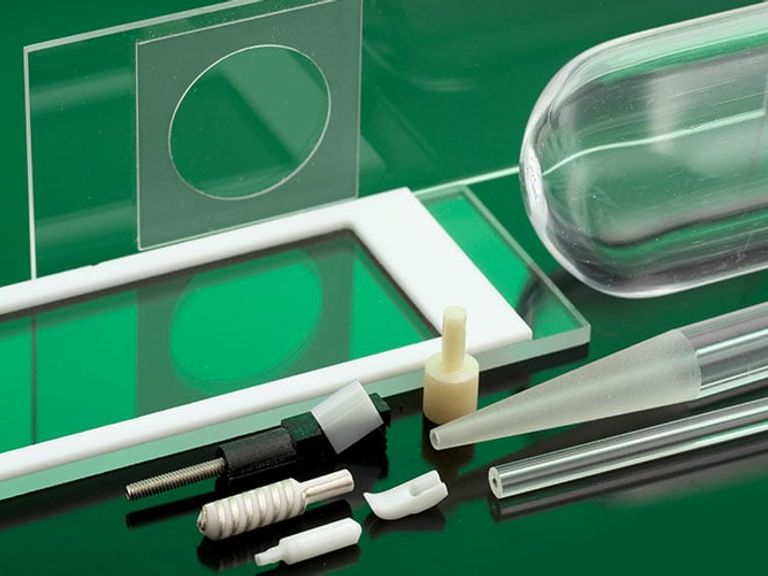
Slides, cuvettes, capillaries, precision tubes, filters, sapphire windows, ceramic probe tips, nozzles, blades, and IR components for diagnostic, surgical, and ophthalmic devices.

IRD manufactures to your print, and works with teams that know the device far better than they know the glass. Send the drawing with the sterilisation route, fluid or chemical contact, optical requirement, and acceptance evidence, and the technical team reviews it for manufacturability before quoting. For a new design that review is free of charge.

Demonstrated parallelism
5 µm
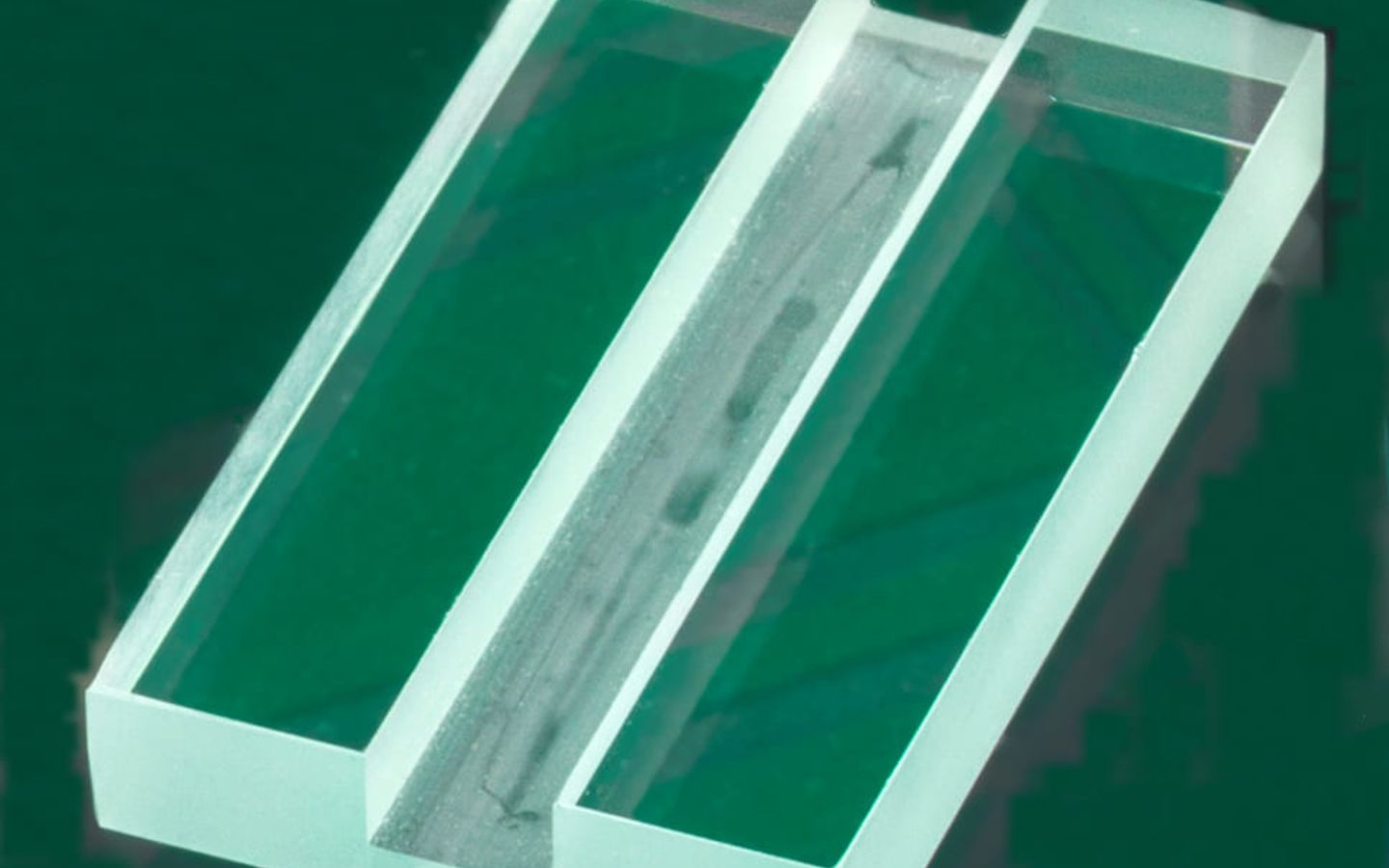
Held between a polished surface and two 140 µm polished edge rails on a published medical program. One demonstrated result on one geometry — not a catalog specification.
Materials
Glass + ceramic
Optical glass, filter glass, borosilicate, sapphire, IR substrates, and advanced ceramics. Every glass reacts differently — some to moisture, some to acids, some scratch or fracture easily — so the choice follows the environment, not just the optical requirement.
Surface treatments
7 families
Thin film, hydrophilic, hydrophobic, anti-reflective, UV-reflecting, chemical strengthening, and heat strengthening are the treatments IRD publishes for medical work.

What we manufacture

Components around the device function

Medical glass is not one material or one component class. The operating environment determines the right substrate and finish.

Device components

What IRD builds for medical OEMs, from the sample path through the optical path to the tip that touches tissue.

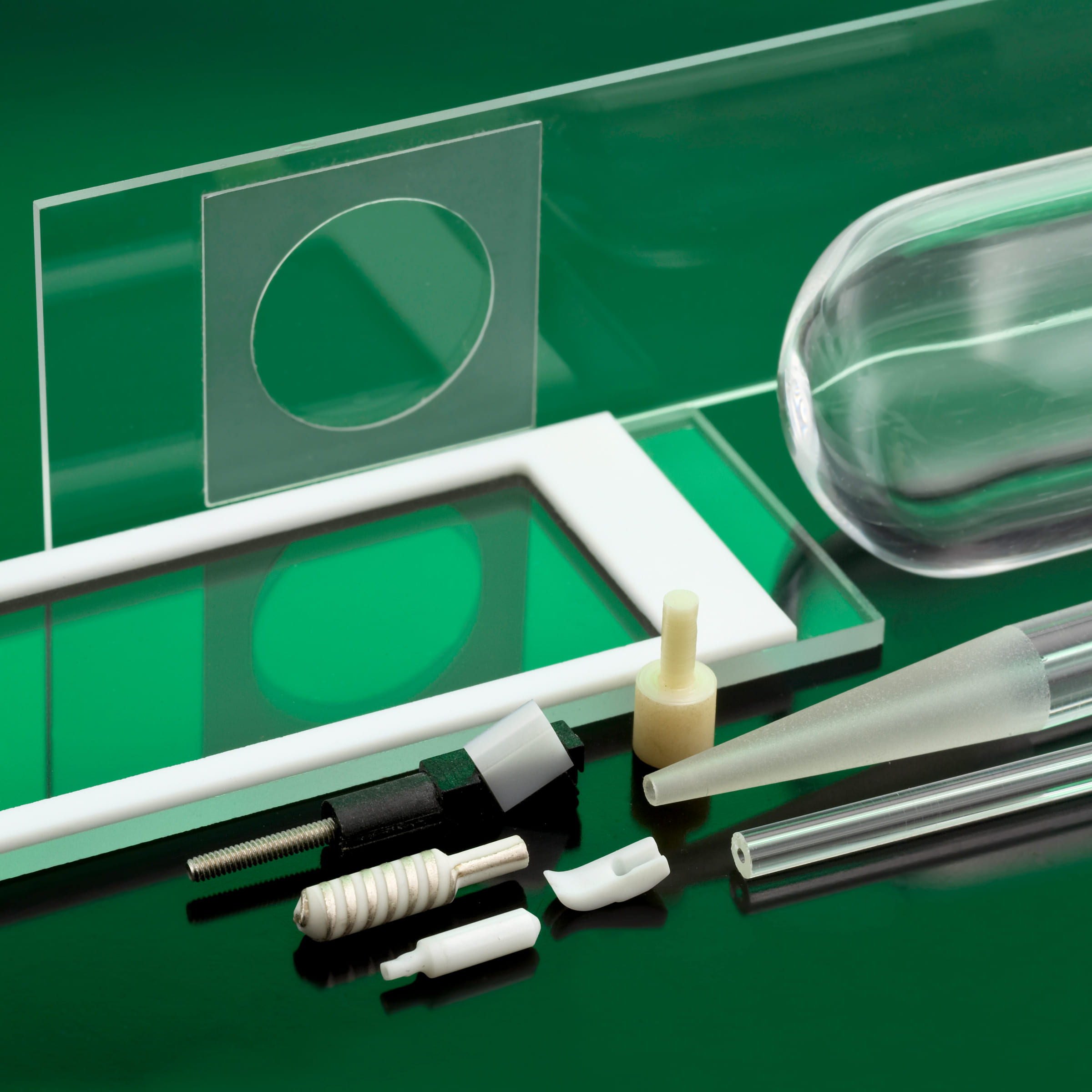
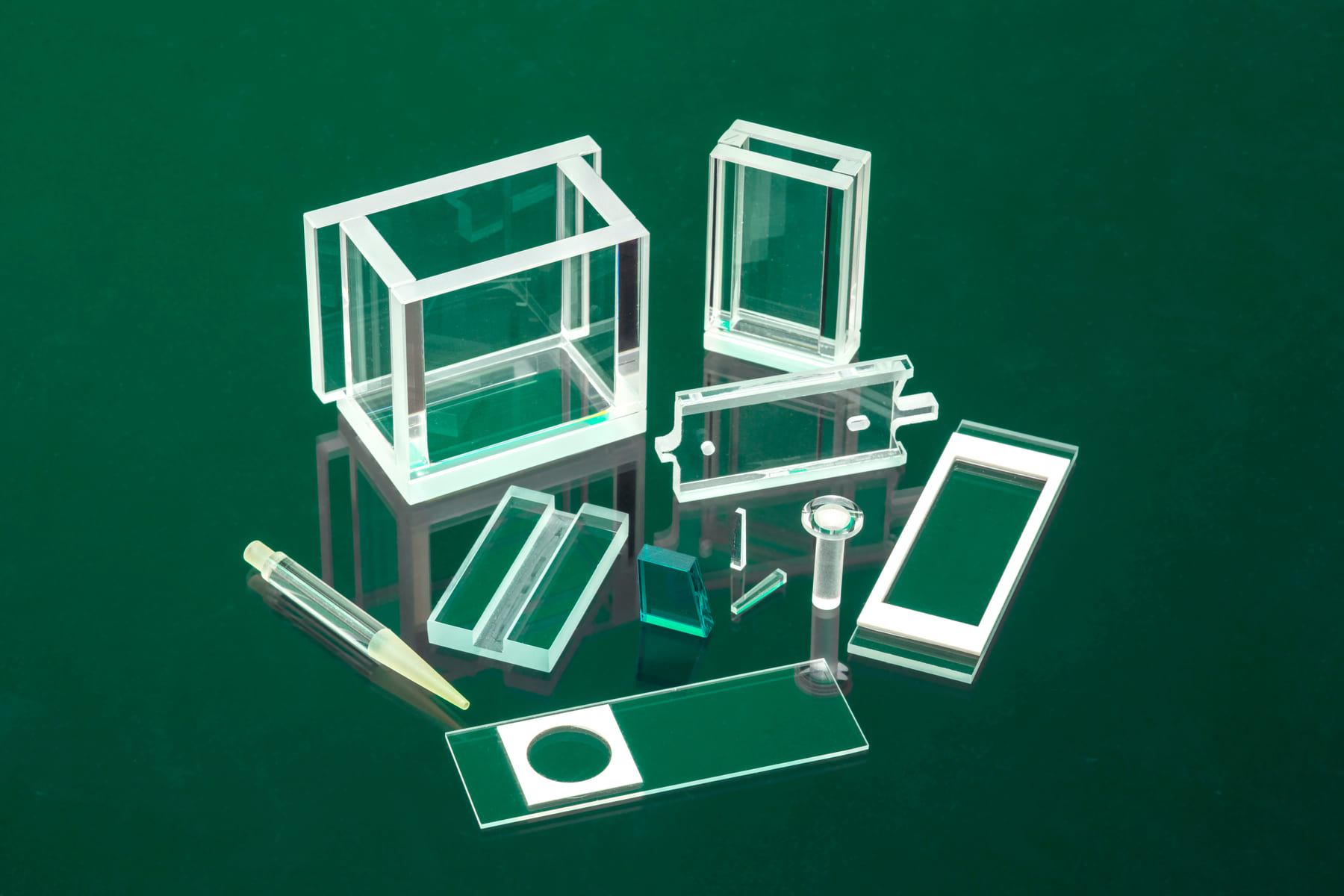
Precision medical glass components manufactured by IRD Glass

Slides, cuvettes, and capillaries

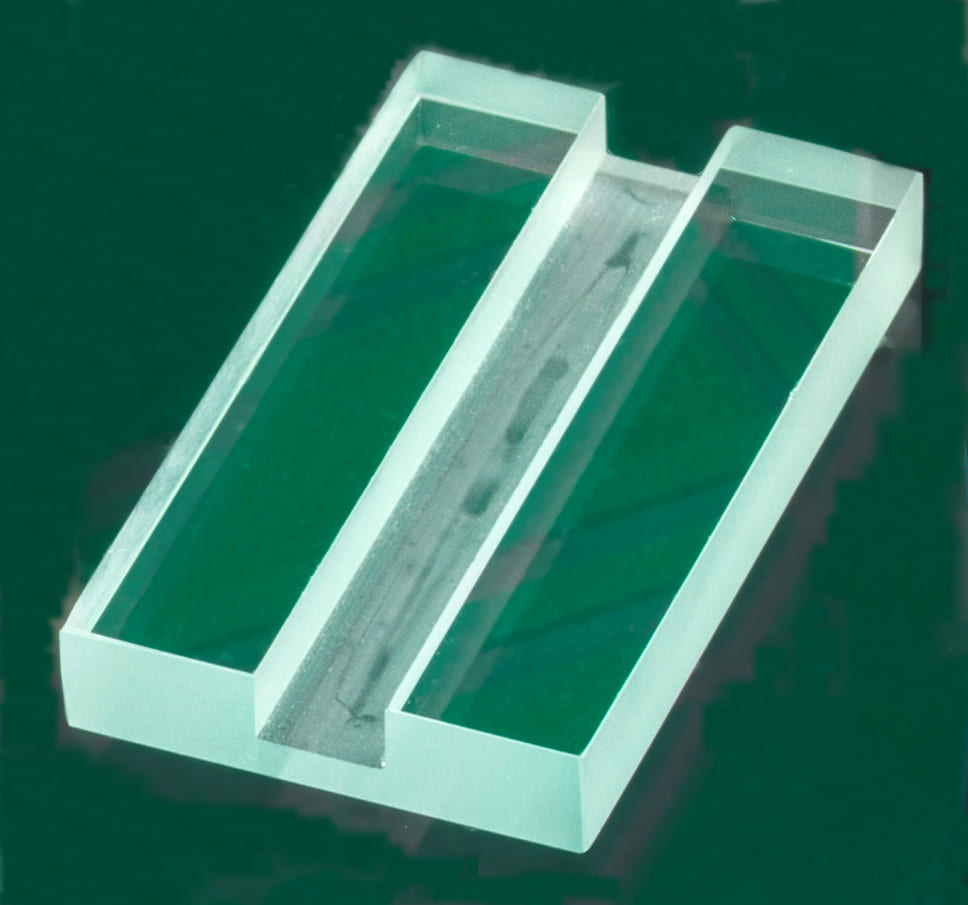
Custom medical and microscope slides, cuvettes, and capillary slides for diagnostic imaging, sample handling, microscopy, and test devices — including field sterilisation and sterilisation verification.

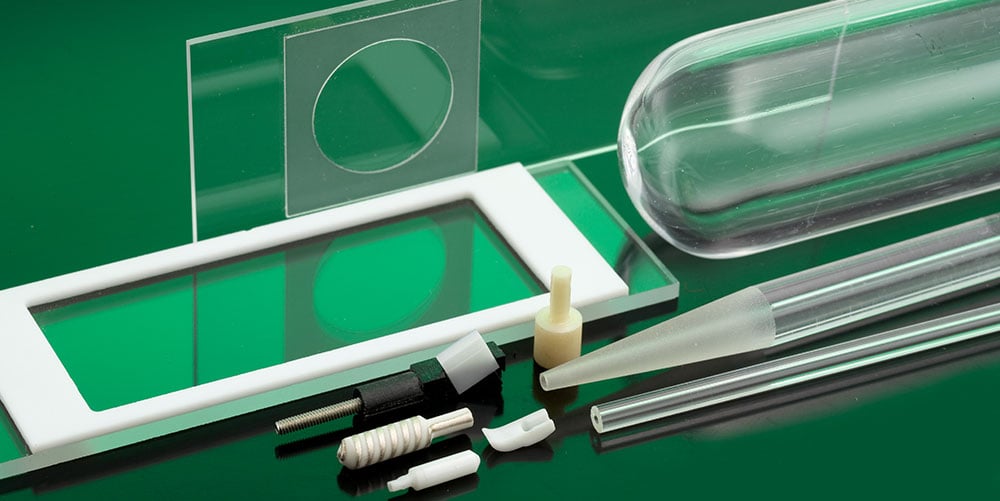
Medical glass assemblies manufactured by IRD Glass

Precision tubes

Sterilisable tubes that do not react to gases, body fluids, or chemicals, designed around flow restriction, capillary behaviour, length tolerance, end finish, and interface geometry.

Custom medical glass components

Probe tips, nozzles, and blades

Advanced ceramic geometry for surgical, ablating, cauterising, fluid, and delivery functions, chosen for heat absorption, hardness, ultra-fine grain structure, and longer wear life than steel.

Precision medical tooling component

Windows, filters, and IR optics

Sapphire windows, optical and filter glass, and infrared lenses for sensing, protection, and spectral control — including sapphire windows added to endoscope probes for durability.

Case study — medical device component

They knew the device. They did not yet know what glass could and could not do.

A publicly traded medical equipment manufacturer needed precision tolerances together with a very smooth surface, controlled light transmission, and extreme durability — and was unfamiliar with both the benefits and the limitations inherent in glass. IRD devised a process to hold 5 µm parallelism between a polished surface and two 140 µm polished edge rails, worked closely with the customer's team on the real tradeoffs between glass and plastic, and then recommended, qualified, and implemented a new manufacturing process. The finished process exceeded the component's original lifetime expectation by 1200%. Unit cost went up; overall cost came down dramatically. IRD remains sole source on the program.

Talk to an applications expert
Custom medical glass components
5 µm
Parallelism held between a polished surface and two 140 µm polished edge rails
1200%
Improvement over the component's original lifetime expectation
Sole source
On a global health program, with overall cost down despite a higher unit price
Process control

Built for the device, documented for the file

A medical component is qualified once and then has to keep behaving the same way through sterilisation cycles, fluid contact, and thousands of units. These are the controls that decision rests on.

Material is reviewed against the environment, not the drawing alone

Some glasses are highly reactive to moisture, others sensitive to acidic environments; some are brittle and prone to fracture, others scratch easily. IRD helps choose the substrate with the durability, transparency, and compatibility the device needs before the geometry is frozen.

Surface treatment is part of the component specification

Thin film, hydrophilic and hydrophobic treatments, anti-reflective coating, UV reflectors, and chemical or heat strengthening are all applied in the same route as machining, polishing, and patterning — so the treated surface is the surface that was inspected.

Ceramics carry the thermal jobs glass cannot

Probe tips, nozzles, ablating and cauterising tips, and cutting blades are made in advanced ceramics for their heat absorption, hardness, and ultra-fine grain structure, and they run at IRD Ceramics on equipment built for super-hard materials.

Tubes are specified around the fluid, not just the bore

Precision tubes are designed to be sterilised, to stay inert against gases, body fluids, and chemicals, and to restrict flow or prevent capillary action by geometry. Length tolerance, end finish, and scratch-dig are all controlled alongside the bore.

Capability ranges.Specify what the system needs.

The part print remains authoritative. These general process ranges help frame feasibility before material- and device-specific review.

AttributeTypicalBest caseApplication note
Machining±.005″ dimension±.0001″Mounting features, profiles, and custom geometry
PolishingRa < 1 µinRa < 5 ÅOptical faces and performance-critical surfaces
Lapping±.000050″ flatness±.000010″Seals, spacers, and precision interfaces
Grinding±.002″ dimension±.0002″ flatnessID, OD, surface, and profile grinding

These are IRD's published general process capability figures, not device-specific commitments and not a substitute for your qualification. Material behaviour under sterilisation, fluid contact, and chemical exposure moves what is achievable, and every feature is quoted individually. Tell IRD what documentation and traceability have to travel with the parts, and the acceptance evidence gets designed into the route rather than added to it.

Custom medical glass components
Cell-based production

Strict specifications deserve a manufacturing conversation early.

IRD works with medical teams that know the device better than the glass. The applications team translates device function into material, process, inspection, and packaging choices without asking the buyer to become an optics fabricator — and a dedicated cell then owns the part from raw material to shipment.

The IRD Advantage
5 µm
Parallelism demonstrated on a published medical program
2
Minnesota facilities — glass in Litchfield, ceramics and sapphire in Alexandria
98%+
On-time delivery, past decade
Application fit

Materials, forms, and uses

Use these lists to frame the first review. The drawing, environment, performance requirement, inspection method, and volume determine the final route.

Components

  • Capillary slides
  • Cuvettes
  • Optical filters
  • Probe tips and nozzles
  • Precision tubes
  • Sapphire windows

Considerations

  • Sterilization
  • Fluid and chemical exposure
  • Optical clarity
  • Edge condition
  • Traceability
  • Packaging

Applications

  • Ophthalmology
  • Endoscopy
  • Microscopy
  • Diagnostics
  • Surgical systems
  • Infrared sensing

Production assurance

ISO 9001:2015Certified quality management system covering both Minnesota facilities. The system is certified — an individual part is not.
ITAR registeredRegistered with the DDTC. Controlled programs are manufactured and stored domestically in Minnesota.
98%+ on-timeIRD-reported delivery performance, sustained across the past decade.
Review quality & certifications
Keep researching

Related products and industries

The finished component often crosses product categories. These pages cover the nearest materials, processes, and program contexts.

Precision medical tooling component
Start with the print

Send us your custom medical glass components requirement.

Send the drawing with the device function, the sterilisation route, any fluid or chemical contact, the optical requirement, the controlling tolerances, surface treatments, annual volume, and the documentation and traceability that have to travel with the parts. For a new design, the technical team runs a no-cost Design for Manufacturability review before quoting, then estimates prototype and production volumes separately.

Or call 320.693.7217. If you are still deciding between glass, ceramic, and plastic, bring the application rather than a material — that comparison is part of the review.